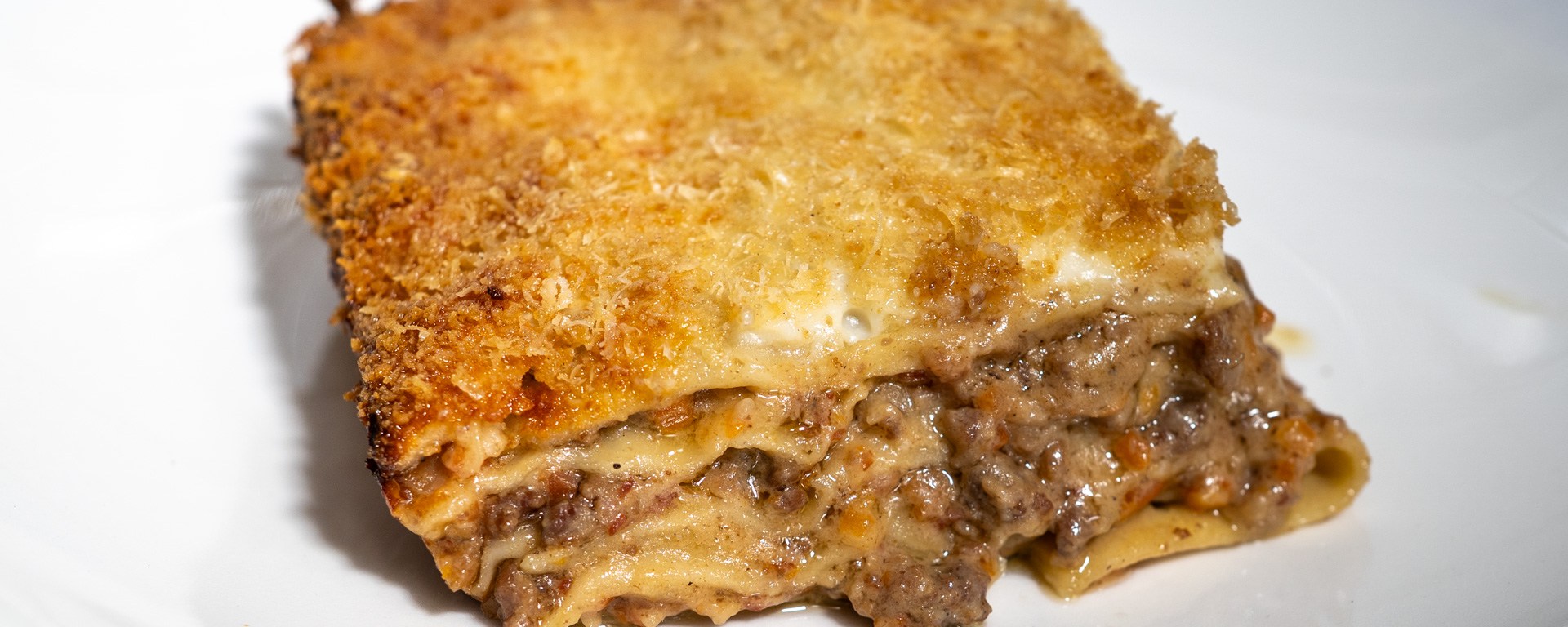
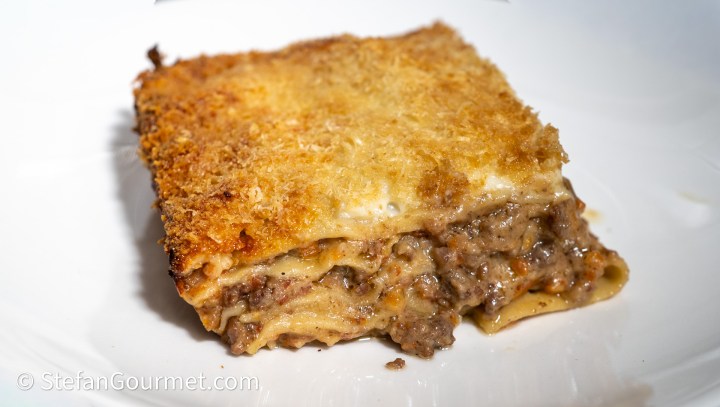
Earlier this year, while visiting the Northern Italian city of Padova, I spotted a dish on the menu I had never heard of: Lasagne ai tre carni. I always jump at the chance to discover new, authentic classics, and this one piqued my interest. Literally translating to “lasagne with three meats,” I asked the waiter for more information. They explained it was a lasagne featuring a ragù bianco (white ragù), meaning it was prepared without tomatoes, using a combination of ground pork, salsiccia (Italian sausage), and ground beef. It was utterly delicious. While the simplest description might be a Lasagne alla Bolognese without the tomatoes, that comparison truly doesn’t do it justice. It was intensely meaty, wonderfully creamy, layered with thin, velvety sheets of fresh pasta, and finished with a beautiful golden crust. Based on our past experience in Italy of sometimes ordering too much food, we had initially planned for only antipasti and primi, reserving the decision for secondi. However, Kees enjoyed the Lasagne ai tre carni so much that he immediately ordered a second helping instead of an actual secondo!
Here is my version, in which I substitute the ground pork for pancetta to introduce an even greater depth of savory flavor alongside the salsiccia and beef. As with any lasagne made completely from scratch, it requires a bit of dedication, but the results are absolutely worth the effort. While you could easily make and freeze extra ragù, I strongly recommend using freshly made pasta rather than freezing the assembled dish, as the delicate texture of the pasta will suffer upon thawing.
Ingredients
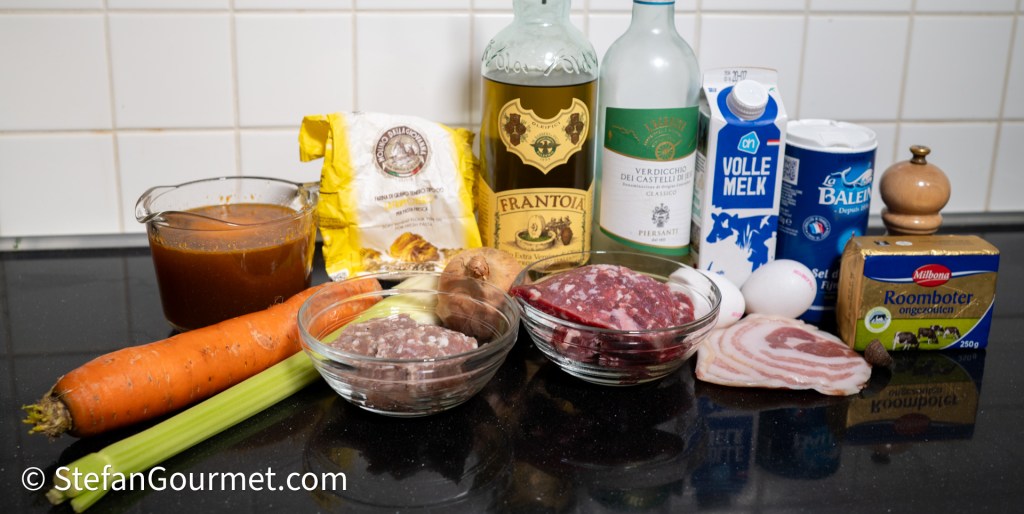
For a 20 cm (8-inch) square lasagna, 4 servings
- 250 grams coarsely ground beef
- 150 grams sweet Italian sausage (salsiccia)
- 100 grams finely chopped pancetta
- 500 ml (2 cups) Italian meat stock (brodo di carne)
- 50 grams each of finely chopped carrot, onion, and celery
- 120 ml (1/2 cup) dry white wine
- Besciamella made from 500 ml (2 cups) whole milk, 50 grams butter, and 50 grams flour
- Fresh pasta dough made from 2 eggs and about 200 grams (1 1/3 cups) Italian 00 flour
- Salt and freshly ground black pepper
- 2 Tbsp extra virgin olive oil
- A dash of freshly grated nutmeg
- 2 Tbsp dried breadcrumbs
- Plenty of freshly grated Parmigiano Reggiano
Instructions
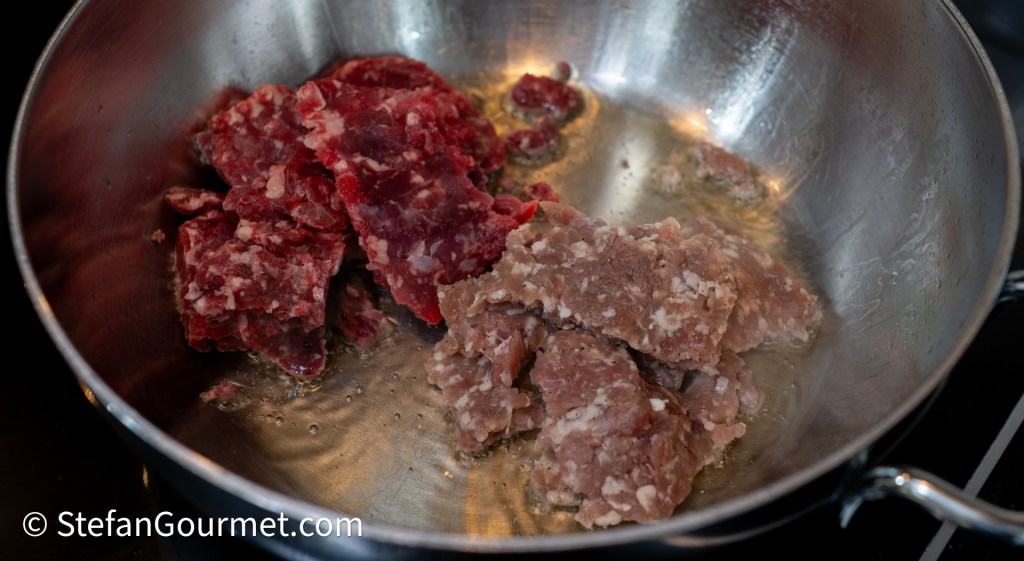
Heat two tablespoons of olive oil in a casserole over high heat. Add 250 grams of ground beef and 150 grams of salsiccia meat, removed from its casing.
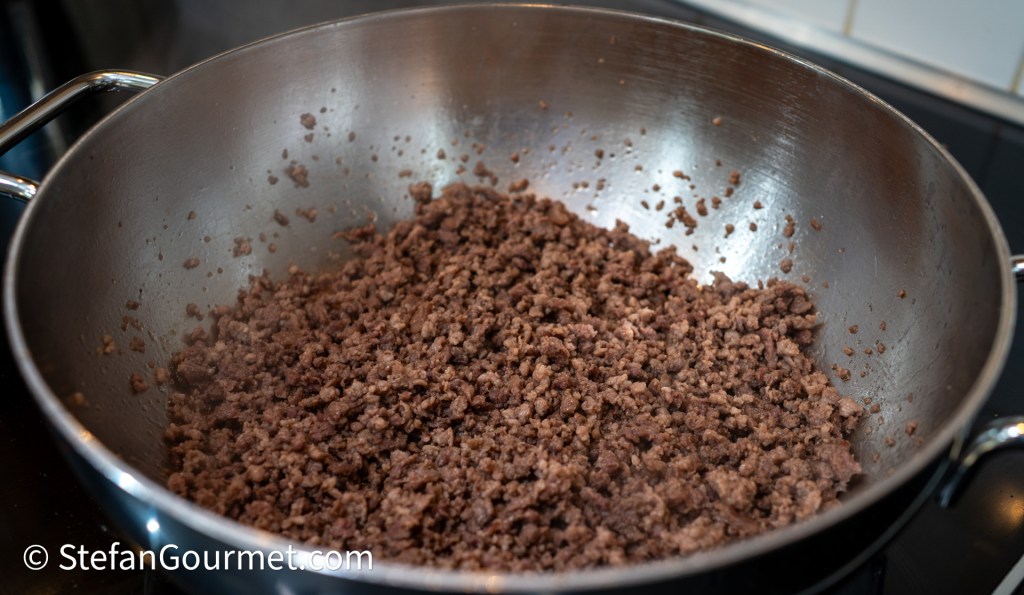
Stir over high heat with a wooden spatula until the meat is completely broken up and sizzling. The sizzling indicates that the moisture has evaporated, allowing the meat to brown—an essential step for flavor development.
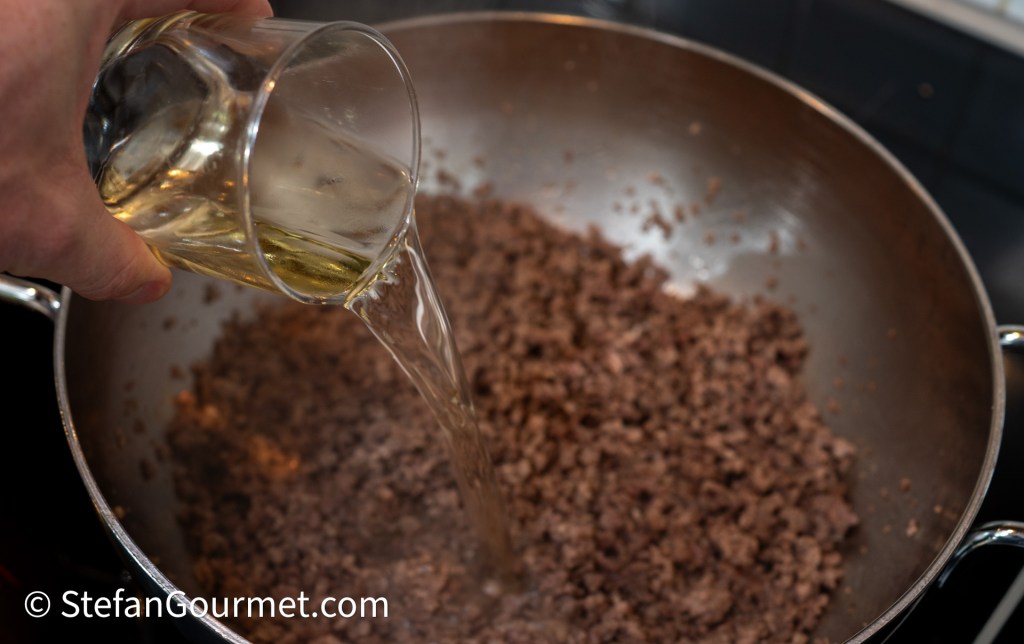
Deglaze the pan with 120 ml of dry white wine.
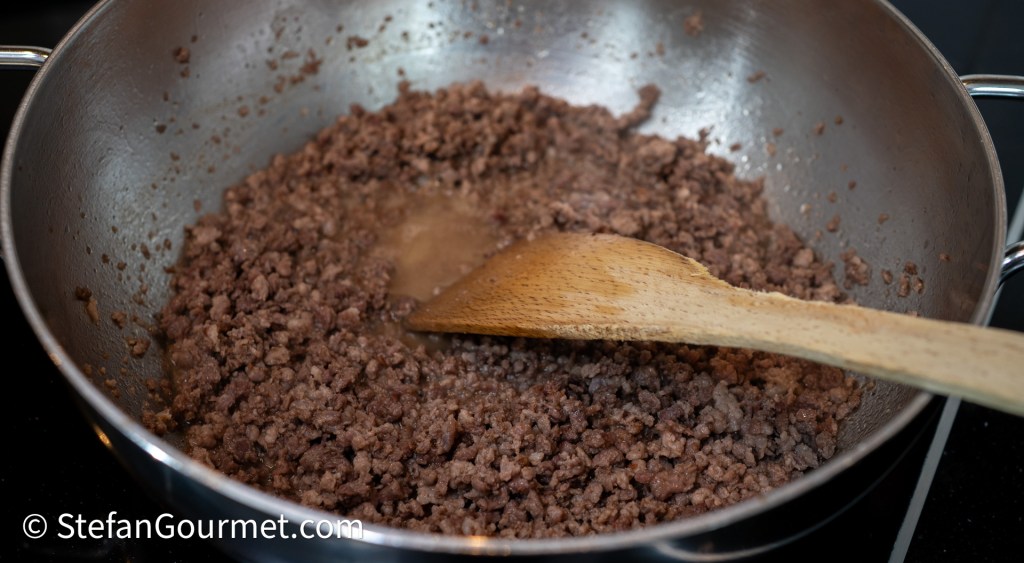
Stir over medium-high heat until the wine has evaporated, making sure to scrape up all the browned bits stuck to the pan from browning the meat.
Transfer the meat from the pan to a bowl or plate and set it aside.
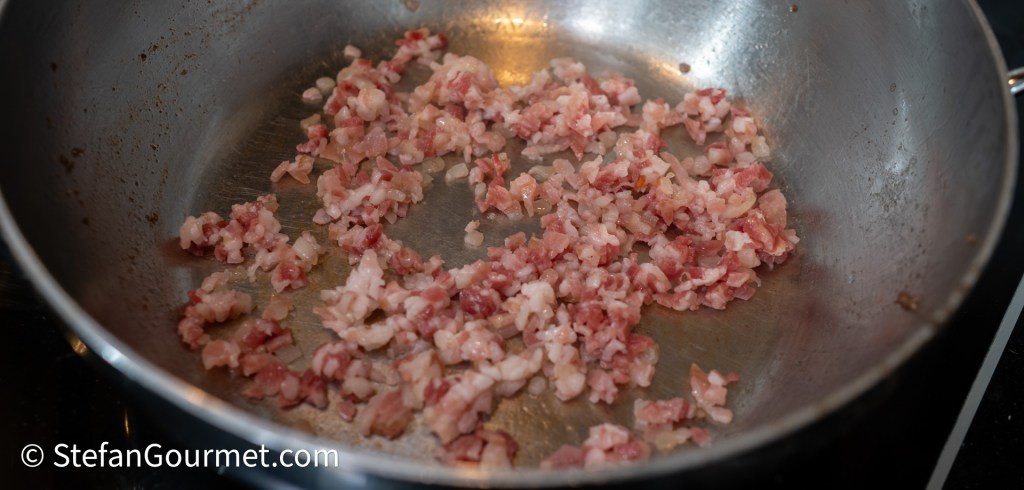
Add 100 grams of finely chopped pancetta to the same pan.
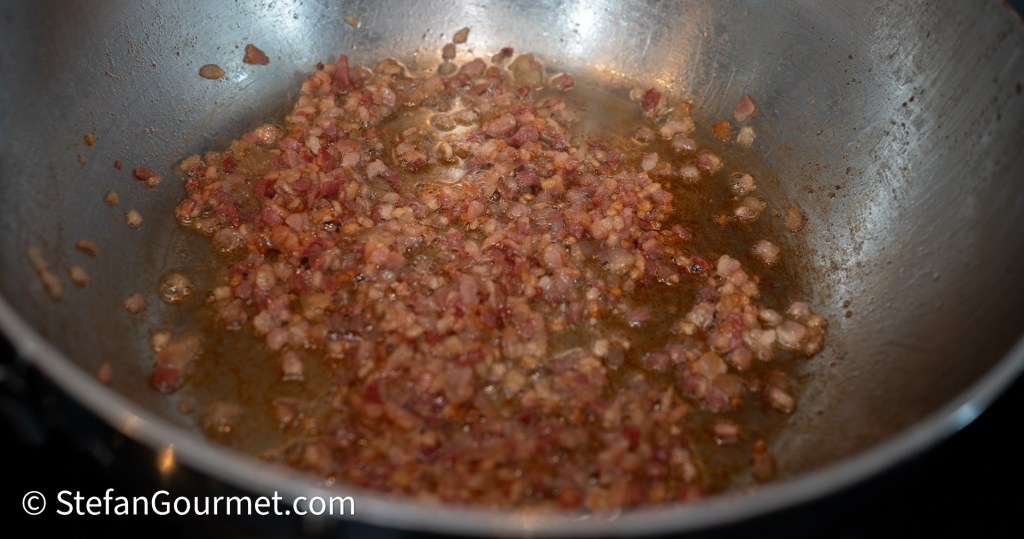
Cook the pancetta over medium heat until some of the fat has rendered and it starts to turn golden, but do not cook it until it is brown and crunchy.
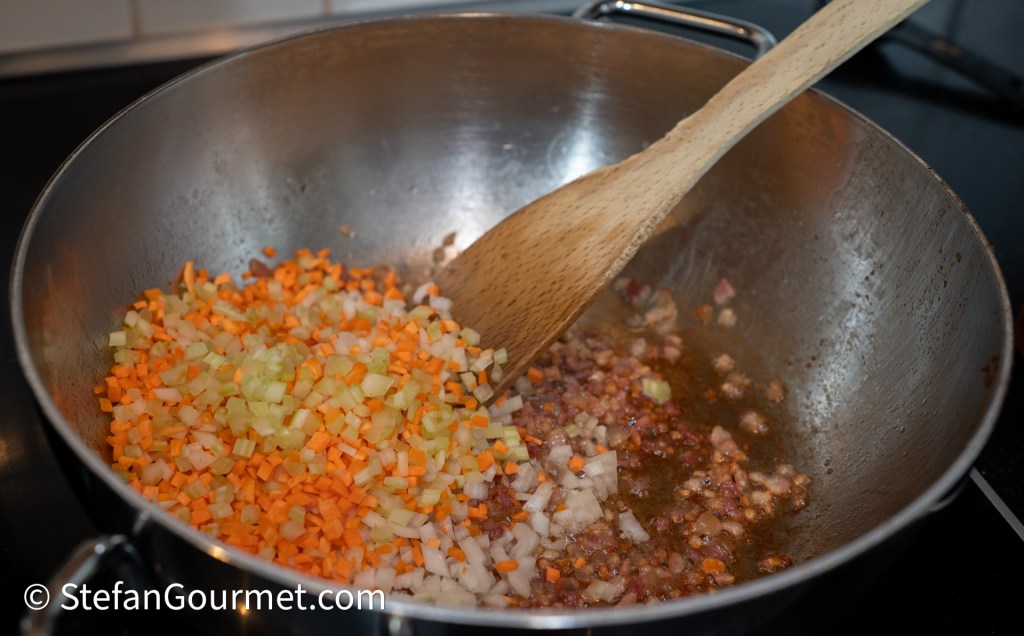
Add 50 grams each of finely minced carrot, onion, and celery.
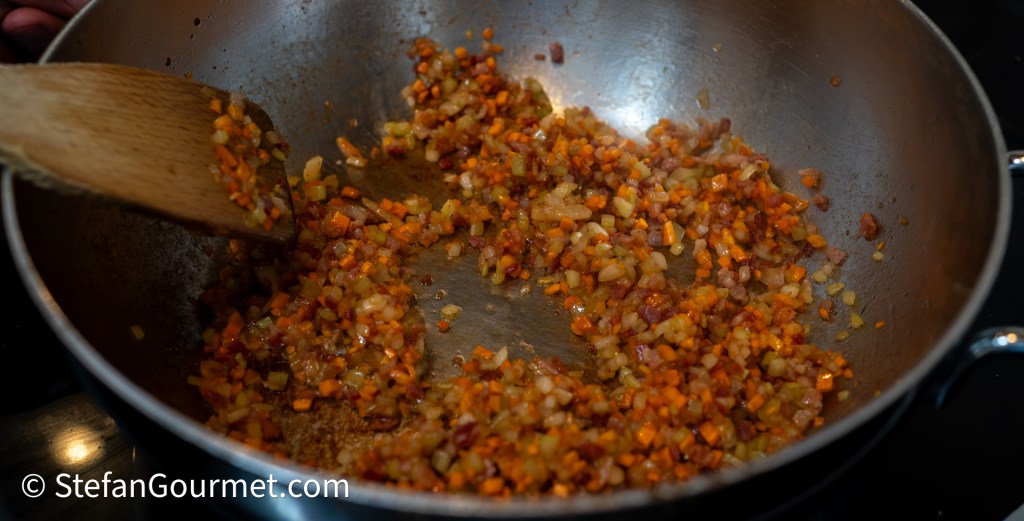
Stir over medium-high heat until the vegetables are golden.
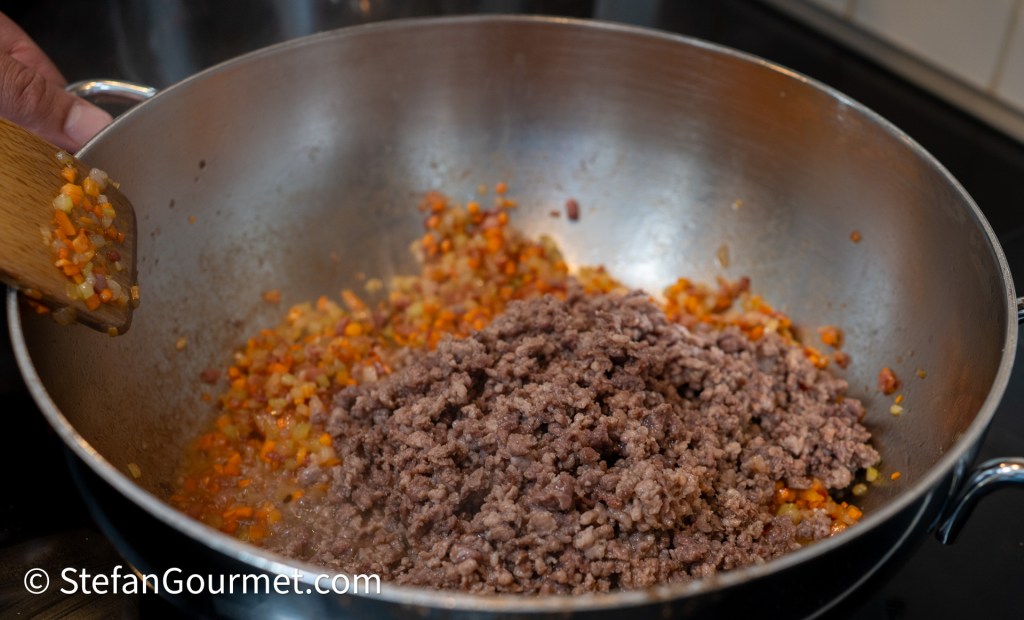
Add the reserved meat…
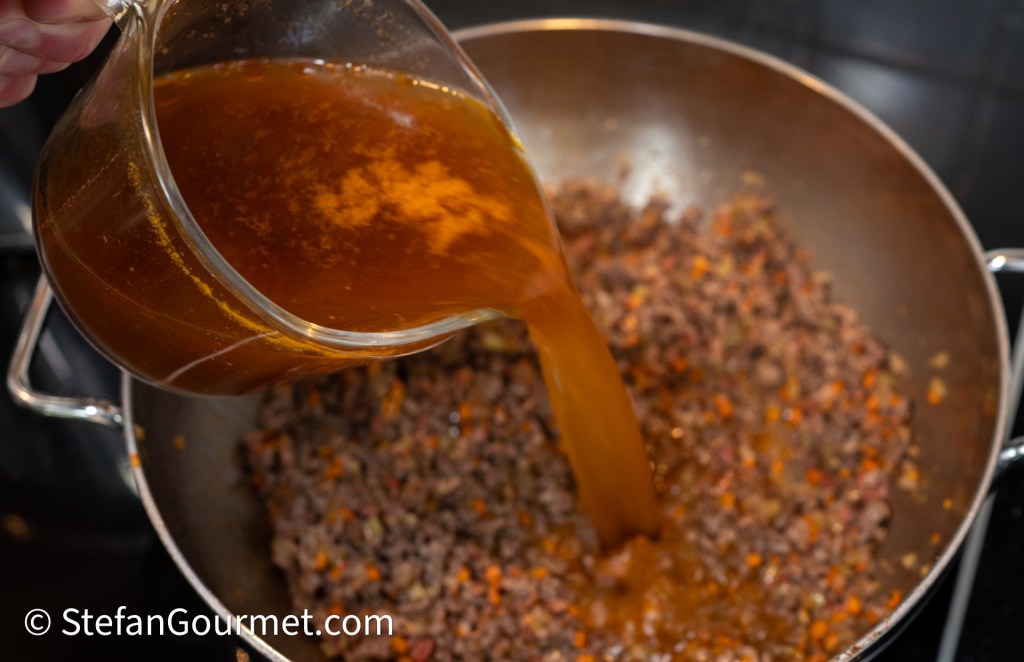
…followed by half a liter of meat stock. Stir to combine, scraping the bottom of the pan to incorporate all the flavors.
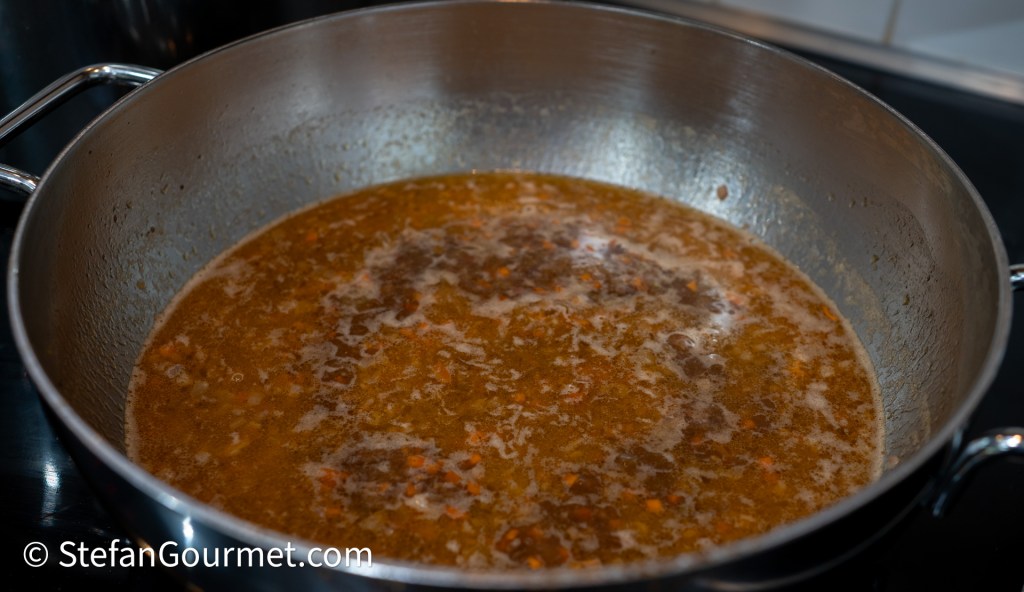
Bring to a boil, then reduce the heat to a simmer. Season with freshly ground black pepper. Salt is likely unnecessary, as the pancetta and salsiccia are already quite salty.
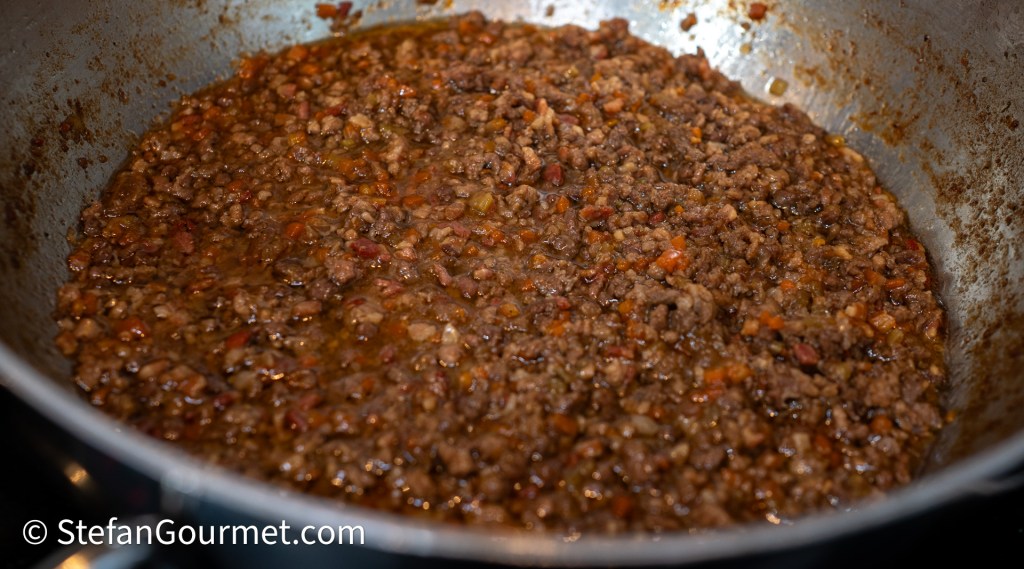
Let the ragù simmer over low heat, uncovered and stirring occasionally, until it is no longer soupy and the meat is tender. This will take 2 to 3 hours.
While the ragù is simmering, make fresh pasta dough using my instructions from two eggs and about 200 grams of Italian 00 flour. Wrap the dough in cling film and allow it to rest in the refrigerator for at least half an hour.
Preheat the oven to 200°C (400°F).
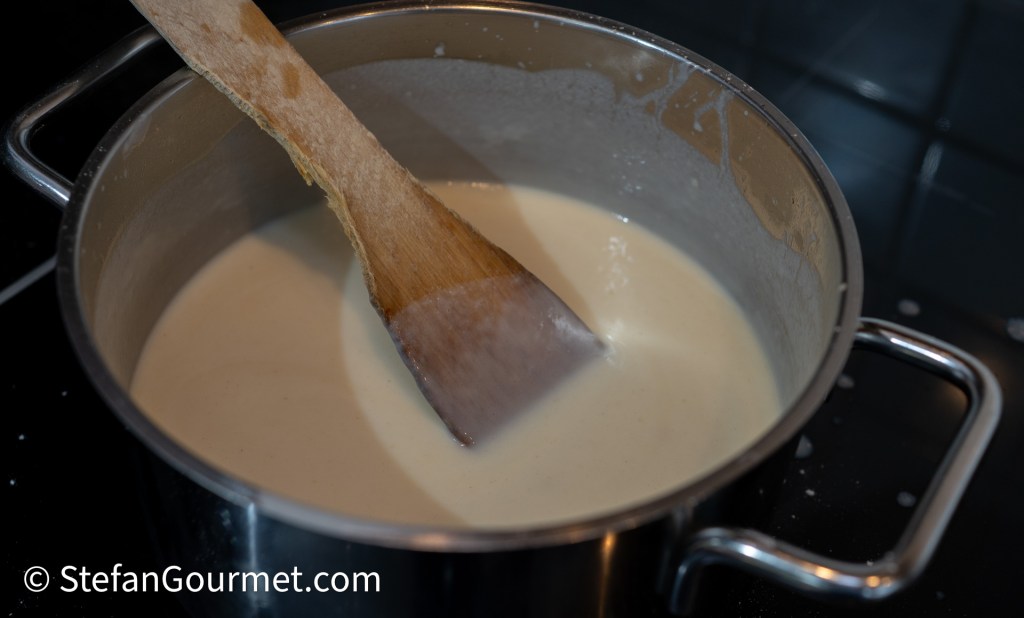
When the ragù is almost done, make a besciamella using 500 ml of milk, 50 grams of flour, and 50 grams of butter, following my instructions.
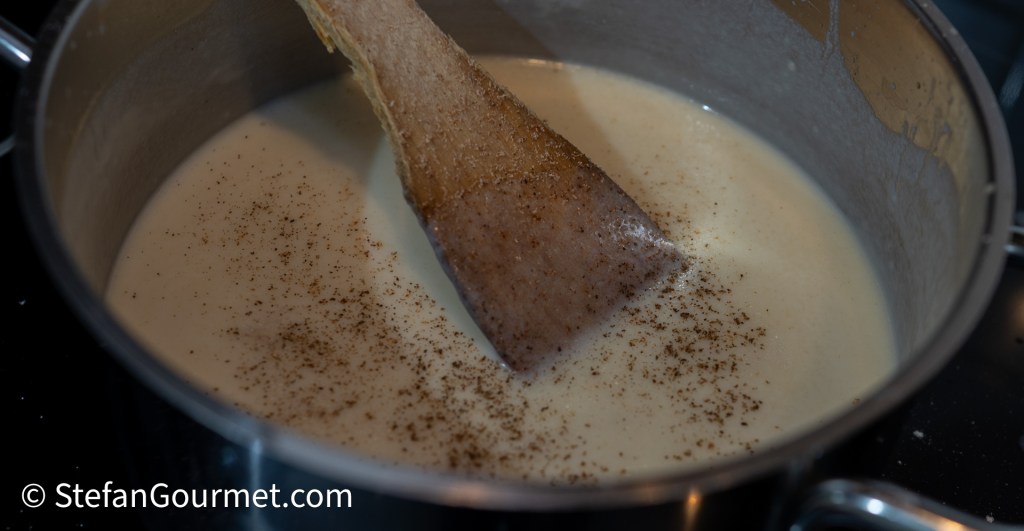
Season it to taste with salt, freshly ground black pepper, and a dash of freshly grated nutmeg.
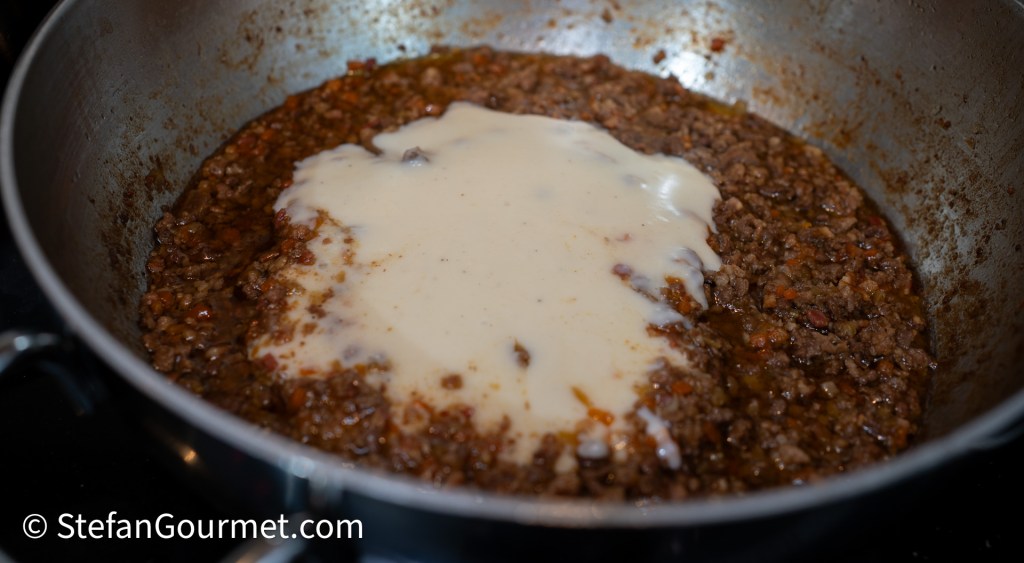
Add three-quarters of the besciamella to the ragù and reserve the remainder.
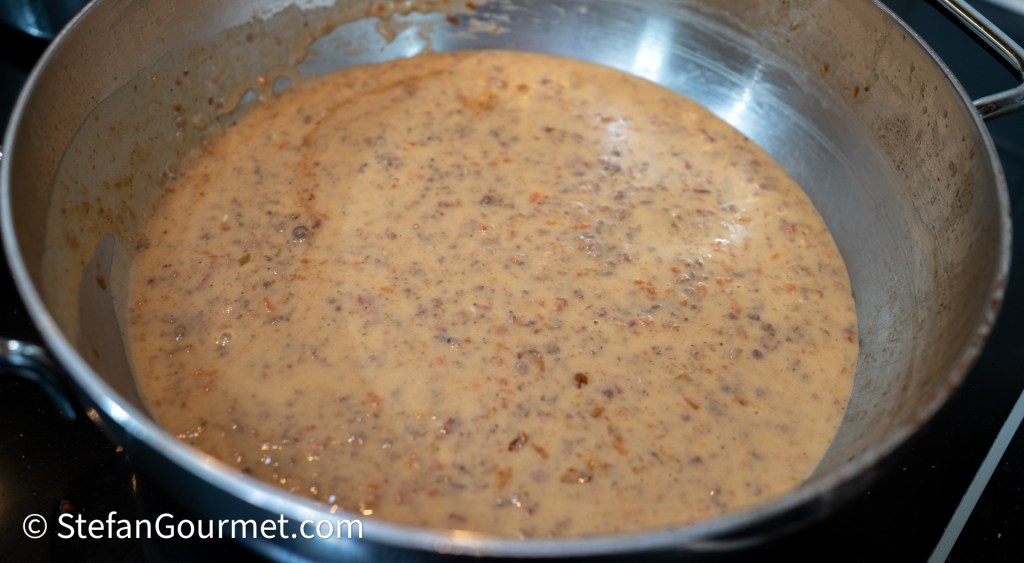
Stir until the besciamella and ragù are well combined. Taste and adjust the seasoning with salt and freshly ground black pepper.
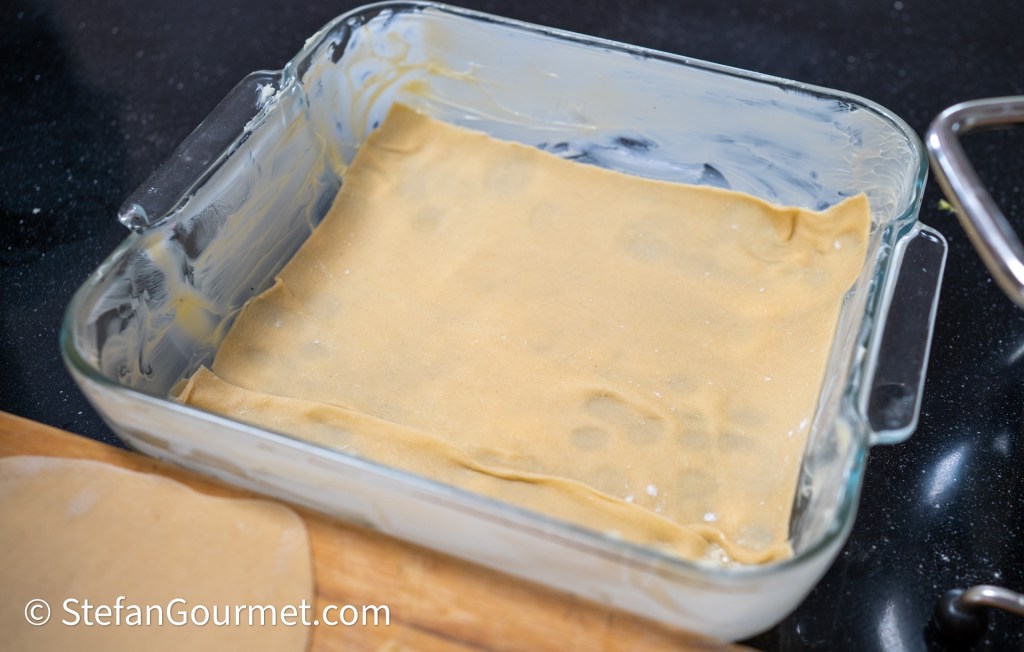
Roll out the pasta dough into thin sheets and cut them to the size of the lasagna dish; it is fine to construct one layer of pasta from multiple sheets. Grease a 20 cm square lasagna dish with butter. Arrange the first layer of pasta directly on the buttered bottom of the dish. When making lasagna with fresh pasta and a sufficiently wet sauce, there is no need to parcook the sheets.
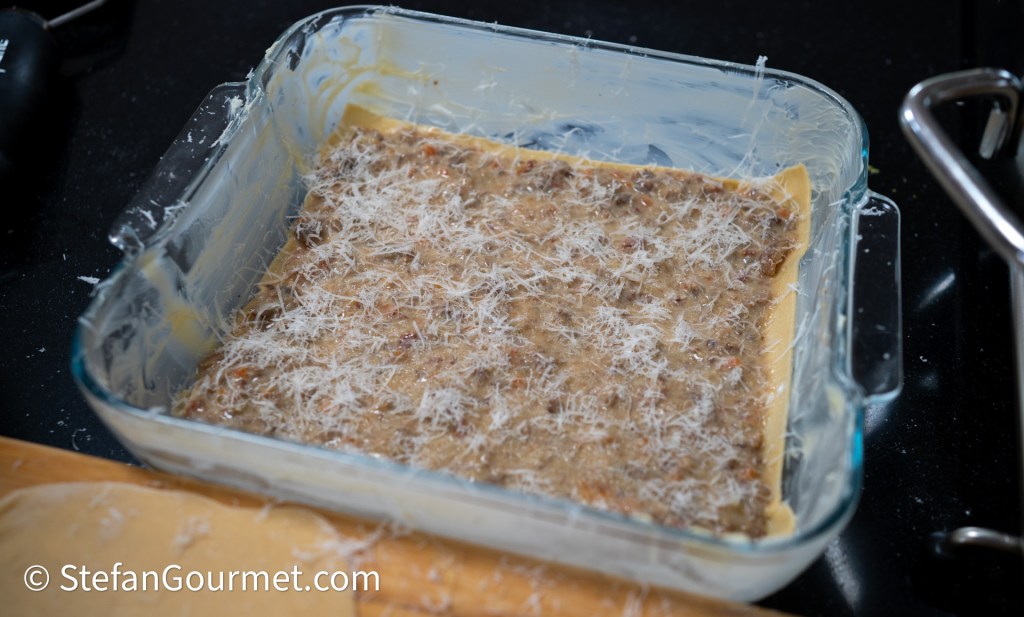
Place a quarter of the ragù mixture on top of the pasta and spread it out evenly with a spatula, ensuring the pasta is completely covered. Sprinkle evenly with freshly grated Parmigiano. Repeat this process with three more layers of pasta, ragù, and cheese.
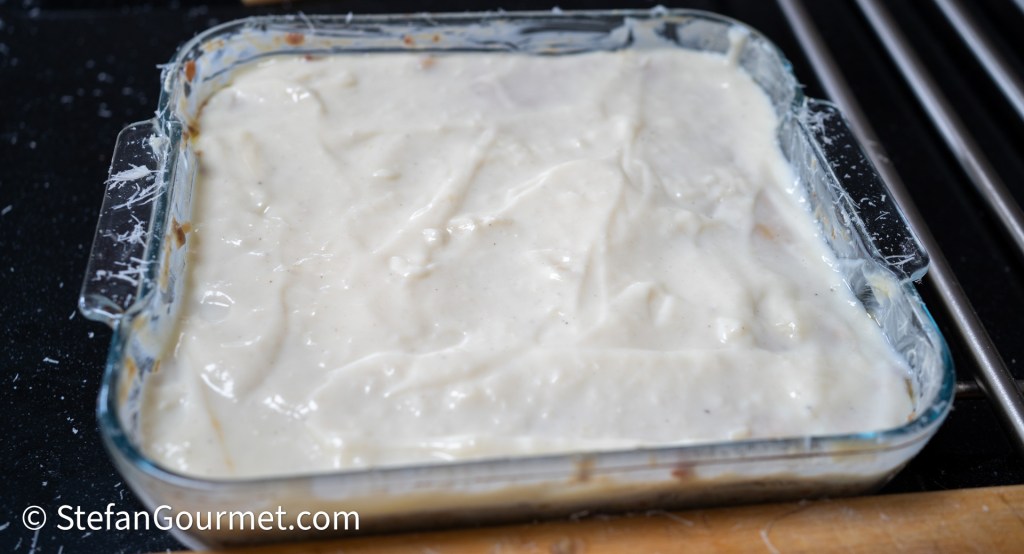
Finish with a final sheet of pasta covered by the reserved besciamella, again spreading it evenly to cover all of the pasta. Altogether you will have 5 sheets of pasta, 4 layers of ragù mixed with besciamella, and 1 layer of besciamella on top.
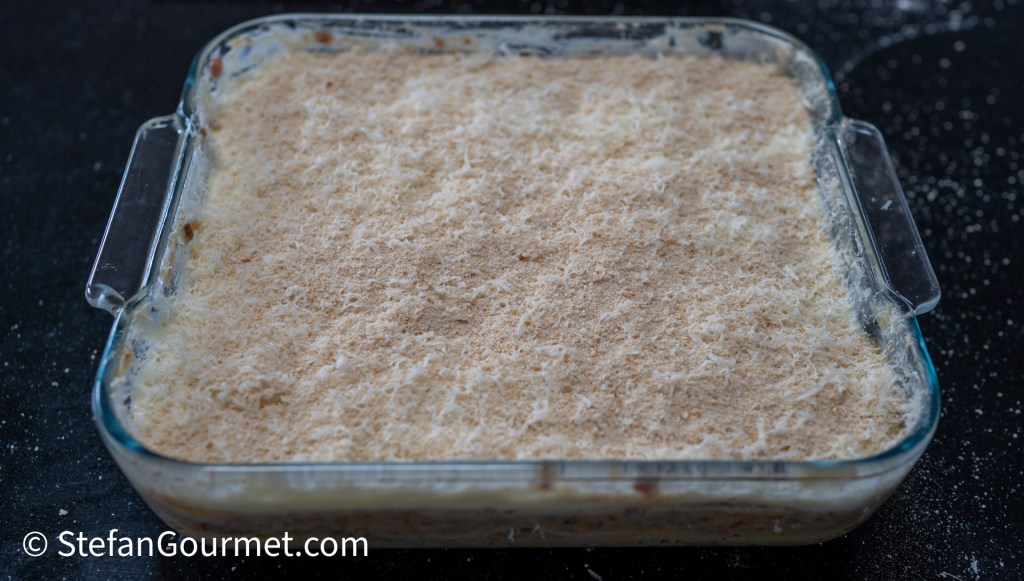
Top this with a generous layer of freshly grated Parmigiano and an even sprinkling of two tablespoons of dried breadcrumbs.
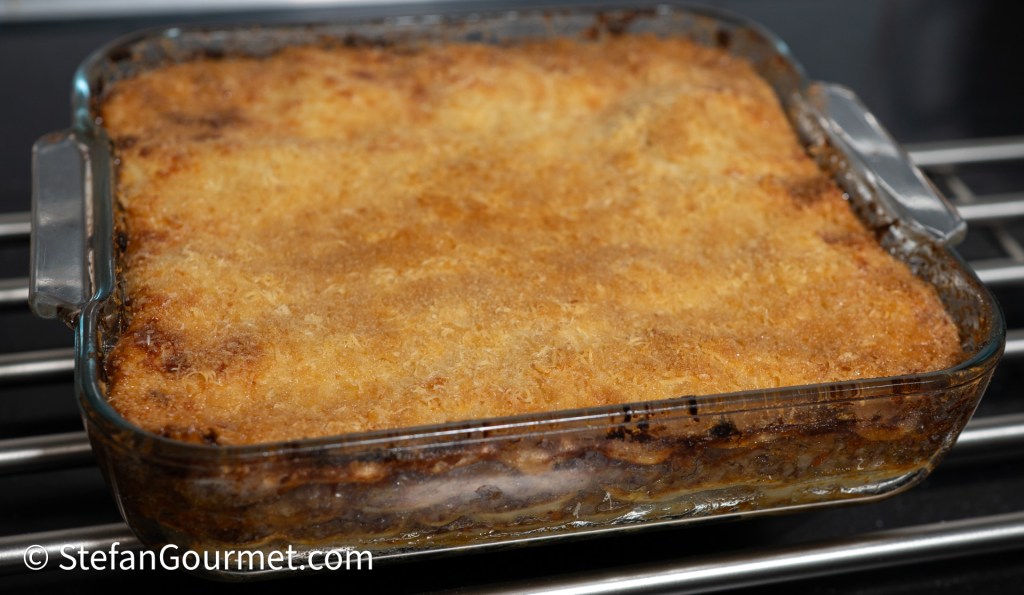
Bake the lasagna at 200°C (400°F) until the top is golden brown and the sauce is bubbling, about 30 minutes.
Allow the lasagna to rest for 5 to 10 minutes before cutting; this will make it easier to transfer the portions to plates without them falling apart.


Different! Exciting! Dangerously ‘simple’ sounding! I am a more-than-fair-cook but wonder how close to yours I would get . . , would love to see how firm or soft it presented, would love the taste after your using both the sausage and pancetta. And the pasta would have to be perfect . . . yum . . . what a dish coming twixt the Thai excitements . . . be well . . .
LikeLiked by 1 person
I have often seen Italian chefs fry the soffritto first and then the meat, without browning it too much. Normally, I would do it the other way around. What do you think?
LikeLike
Hi, starting with the soffritto and then adding the meat is the older method. More modern recipes brown the meat separately from the pancetta and aromatics, like I did here. However, almost all Italian recipes will tell you to cook until it sizzles, which means that you should keep going until the water is gone and the meat starts to brown. I haven’t done a side by side comparison, but the belief is that browning the meat will produce more flavor due to the Maillard. The reason I am not 100% sure this makes a huge difference is that the Maillard also takes place during the simmering of the sauce. Browning the meat first and then adding the aromatics to that is not a method I’ve ever seen. I think this is because it may lead to overcooking the meat, or not browning the aromatics. The aromatics will release a lot of liquid. If you brown them together with the meat, the moisture can’t evaporate as easily because the meat is in the way, so they won’t brown as well. Again, we’d have to do a side by side to make sure what the impact is on the end result.
LikeLike
Le mie preferite, anche perchè sono allergica al pomodoro
LikeLiked by 1 person
Non lo sapevo! Mi sembra difficile in Italia. Mi ricordo la buonissima passata fatto da te.
LikeLike
Grazie, mi fa piacere che ti ricordi (di me e nn solo della passata). Sono allergica da circa un anno
LikeLike
We went out for dinner to a local place last night and we had their lasagna. He claims to be an Italian from the Puglia area. I have to say the lasagna was one of the worst we’ve ever had. It was so watery, hardly any cheese in it, so your recipe comes at the perfect time. I feel like I was swindled out of a good meal so I’m going to be making lasagna in the next few days.
LikeLiked by 1 person