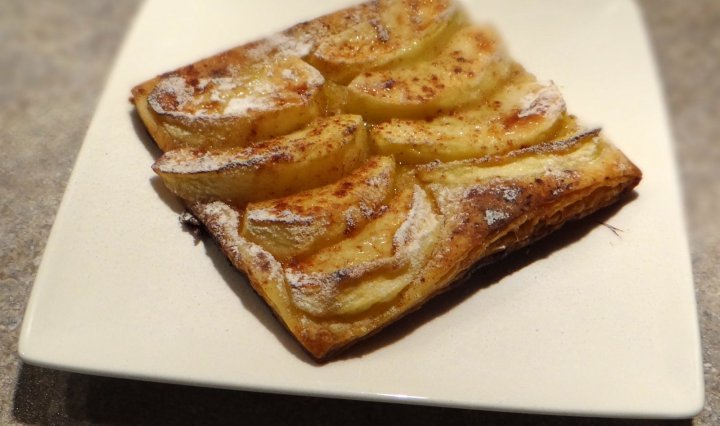
Apple Tatin Cheat

We’re back home from our trip to Australia. After cooking for 4 weeks in a very small primitive kitchen inside a camper van I was really looking forward to cooking in my own kitchen again. During our absence, the wooden floor in our living room and ground floor has been sanded and varnished to make it look as good as new again. It was convenient to have this done during our absence, as all the furniture needed to be removed and the varnish needs to harden for a few days before you can walk on it again.

Unfortunately, when we came home we saw that they had not done a good job and so now an additional layer of varnish will be applied. This means that I won’t be able to use my kitchen for another week 😦 But luckily I have friends who don’t mind having me come over to use their kitchen 🙂

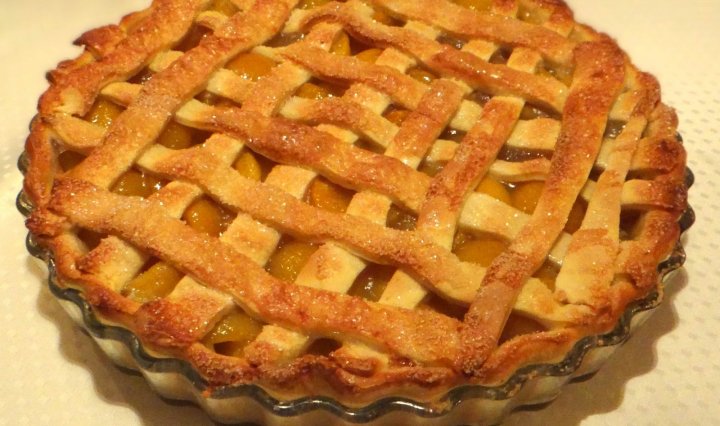
Since a lot of my supplies and equipment are stored in the garage and cannot be reached easily and it’s always difficult to cook in a strange kitchen, for dessert I resorted to this ‘cheat’ to make something that is like tarte tatin, but a lot simpler to make.

Continue reading “Apple Tatin Cheat”

Pork Chop in Tomato Sauce (Primo + Secondo)

map
We are back home from our travels through Australia. Since this is a food blog rather than a travel blog, let me suffice by showing you a map of the route we have traveled (6000 km or almost 4000 miles altogether) in a camper van from coast to coast.

In the other posts I wrote about cooking in the Outback, I told you about how we would on most days kept the cooking to a bare minimum and simply put meat like beef, lamb or kangaroo on our small BBQ. But on one day during a long drive from the West MacDonnells to Kings Canyon I had plenty of time to think and decided to make something that would require more actual ‘cooking’ with the ingredients I had in the camper and of course taking into account the very limited equipment at my disposal. We did not have time to do any shopping, so I used only the ingredients I had bought without a clear idea of how I would use them.

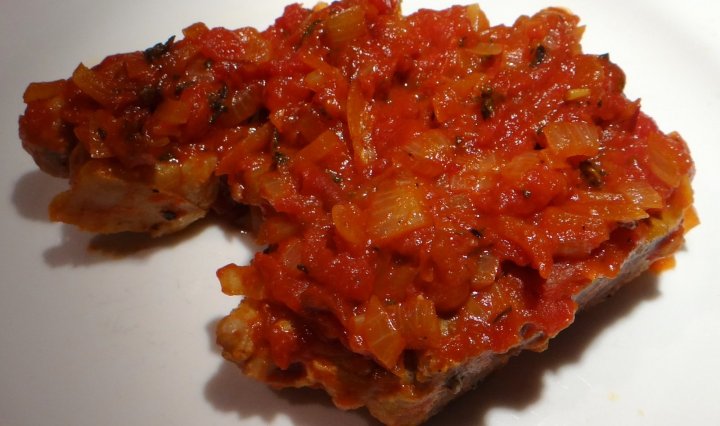
I thought it would be nice not to use the BBQ for a change, and so I decided to simmer pork chops in tomato sauce and then serve the tomato sauce over pasta with additional mushrooms as a primo piatto, followed by the pork chops with the remaining tomato sauce as a secondo (click here if you’d like to know more about the Italian menu structure). I would have liked to use a better marbled shoulder chop for this, but I only had a loin chop so that is what I used. The result was quite nice and I will probably repeat this at home with a shoulder chop or perhaps even sous-vide. Here’s what I did. Continue reading “Pork Chop in Tomato Sauce (Primo + Secondo)”

Dining in Australia: Hentley Farm, Barossa Valley

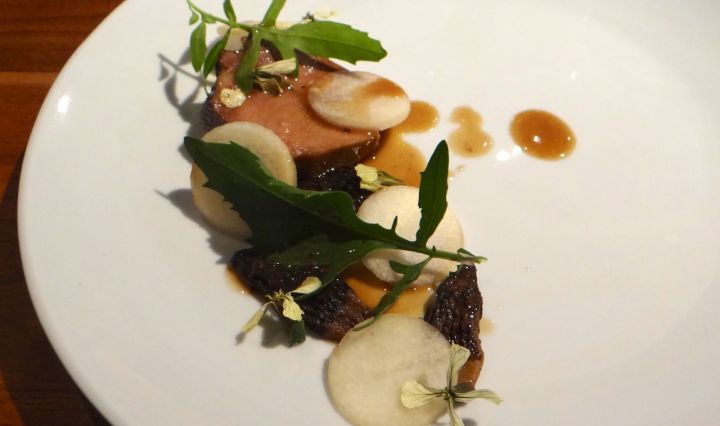
After our camping adventure with simple but tasty food our trip to Australia ended on a gourmet note with a visit to Hentley Farm in the Barossa Valley. Hentley Farm is a winery that showcases its wines in a gourmet restaurant. The restaurant is open for lunch Thursday – Sunday and for dinner Saturday. We had the Discovery menu with paired wines for AUD 210. The menu took us about 4 hours, so it is quite substantial for lunch. There is also a smaller Du Jour menu. All the wines are from Hentley Farm. Continue reading “Dining in Australia: Hentley Farm, Barossa Valley”

Improved Fennel Polpette

A few weeks ago I prepared fennel ‘meatballs’ for the first time, based upon my memory of having them at the great trattoria Tischi Toschi in Messina, Sicily. I was aware that Luca Casablanca, chef and owner of Tischi Toschi, follows my blog, but I had not imagined that he would react to my post. He did, and he left me some constructive feedback. I loved this, as what better way is there to improve upon my cooking then to get feedback from a master? He wrote: “E’ preferibile non passarle nella farina, l’uva passa deve essere quella nera ” Corinto Nero ” nel soffritto mettere cipolla e non aglio, non pomodoro fresco a pezzi bensì salsa di pomodoro, e mi raccomando di metter almeno la metà di parmigiano . Complimenti e grazie del ricordo.”, which means: “It’s better not to put flour on them, the raisins need to be those black ones “Corinto Nero”, use onions instead of garlic for the sauce, not pieces of fresh tomatoes but a tomato sauce, and I recommend to use only half the parmigiano. Well done and thanks for remembering.”

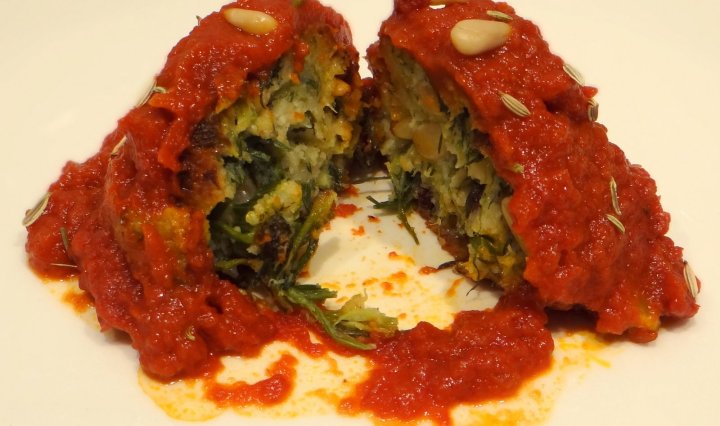
I decided straight away to honor his reaction by making the polpette di finocchietto again, using his suggestions. As you may remember I was not completely happy with the texture of my first attempt, as they were too wet and didn’t keep their shape. I really needed to fix that as well, as without flour they would be even more prone to falling apart. I decided to wring out the fennel greens with a kitchen towel to remove more water from them, and that worked like a charm. Continue reading “Improved Fennel Polpette”

Hazelnut Meringue Cake

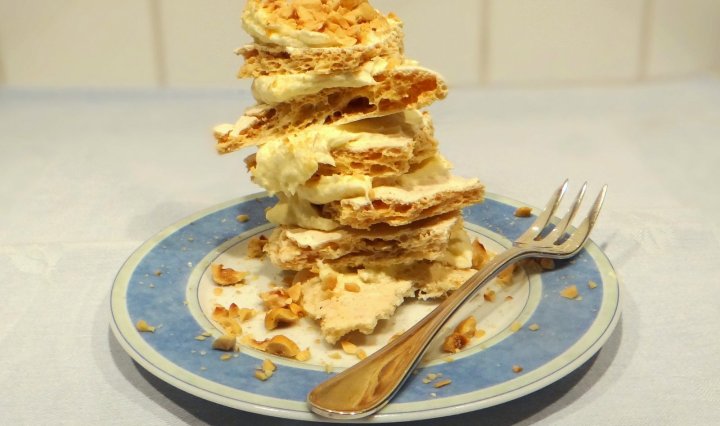
This cake is relatively easy to make and can be presented as a neat layer cake or, as I chose to do in this case, in a more ‘artistic’ way. Kees hates regular meringue, but he loves hazelnut meringue. Traditionally, hazelnut meringue cake is made with a complicated butter cream. The butter cream in this recipe may be slightly less creamy, but it is a lot easier to make and very good all the same. Hazelnut meringe cakes are often coffee-flavored as well, but I decided to use hazelnut liqueur to flavor the butter cream instead. Continue reading “Hazelnut Meringue Cake”

Chicken Ravioli with Sage

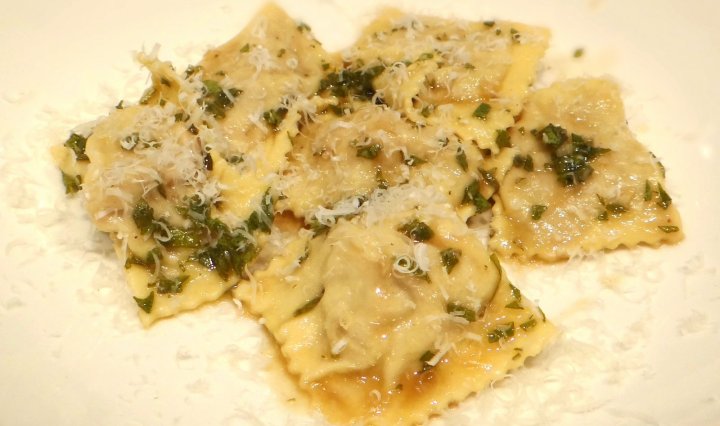
I’ve never seen ravioli with a chicken filling before, but I couldn’t think of any reason why it wouldn’t be nice so I decided to give it a try. I used a good quality free-range chicken with a lot of flavor, cooked the legs sous-vide for the filling and used the rest to make a chicken demi-glace (reduced stock) for the sauce. You could also just braise the chicken legs instead, so it is not needed to own a sous-vide cooker to be able to give this a try. The chicken ravioli turned out just like the name suggests, with a good chicken flavor. The concentrated flavor of the sauce helped to get this effect. If you like chicken, you’ll love these ravioli. Here’s what I did… Continue reading “Chicken Ravioli with Sage”

Risotto alla Bartolini

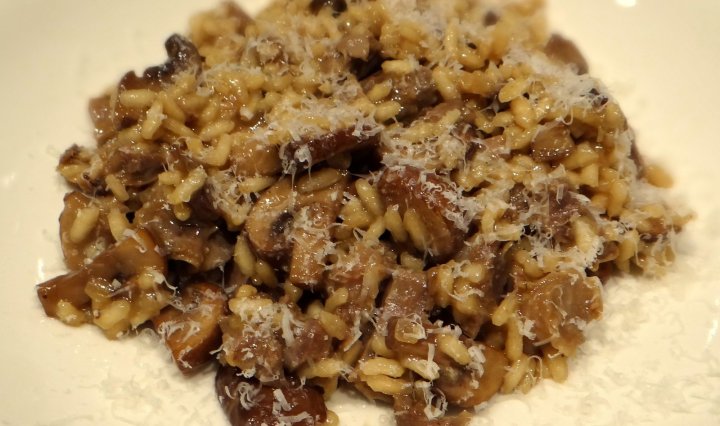
When I saw that John had shared the recipe for one of his family’s crown jewels, the Bartolini family risotto, I knew immediately I was going to prepare it. Even though one of its main components is chicken gizzards, an ingredient I’ve never cooked with before. But I trust the culinary wisdom of John and his Zia (aunt), and it was no surprise that this risotto turned out great. First, because John’s recipes are always top notch, and second, because the idea to parcook the chicken gizzards and prepare the stock for the risotto at the same time makes a lot of culinary sense. The combination of mushrooms and chicken gizzards in the risotto works really well. We liked both the flavor as well as the texture.

Continue reading “Risotto alla Bartolini”

Roo Fillet from the Barbie

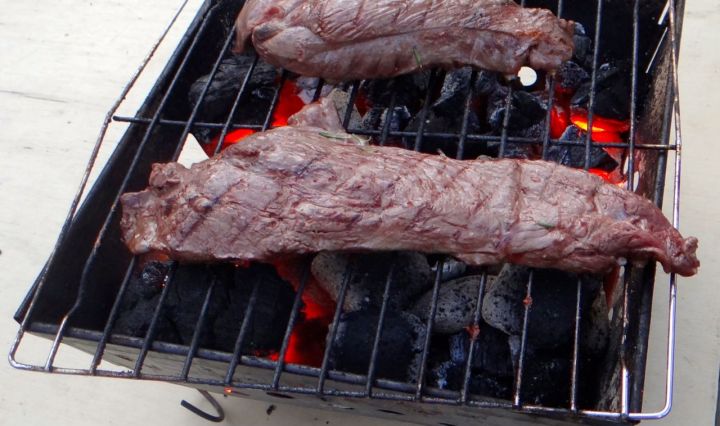
So far during our travels through Australia we had seen plenty of live kangaroos and especially wallabies, but were confronted with an unexpected lack of kangaroo meat at the butcher shops and supermarkets that we visited. Luckily I found some kangaroo fillet steaks at a butcher shop in Alice Springs, so we could finally eat something very Australian: barbecued (grilled) kangaroo. Continue reading “Roo Fillet from the Barbie”

Sgroppino

Sgroppino is a mixed drink from the Italian region of Veneto. The name has been derived from the word sgropìn, which in the local dialect means sorbet. A coworker introduced me to sgroppino in 2009, and I liked it at once. Sgroppini have a very fresh and light taste and are very nice to drink, especially in hot weather. Be careful as they may be too nice and you may not be aware how much alcohol they contain (about 15% by volume, depending on how strong you make them).  Because they are so refreshing, sgroppini are great as a palate cleanser before dessert. If you don’t like heavy desserts, you could even serve just the sgroppini.

The original ingredients of sgroppino were lemon sorbet and grappa. In modern recipes prosecco (which comes from the region of Veneto as well) or another sparkling wines is added, and the grappa is often replaced by vodka (probably because it’s cheaper). Richard McGary mentioned he likes to have limoncello with sparkling wine, which gave me to idea to use limoncello instead of vodka or grappa to make sgroppini. I like this even better than sgroppini made with vodka or grappa, as the limoncello deepens the lemon flavor. Continue reading “Sgroppino”

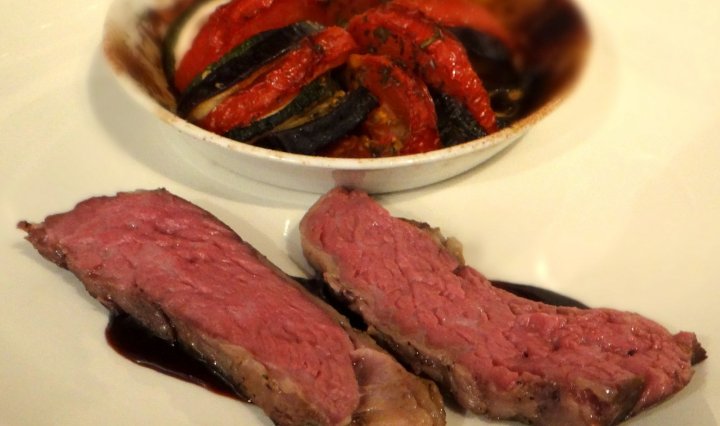
Flank Steak Sous-Vide with Tian Provençal

When Clayton told me he’d be coming over to Amsterdam for a vacation, I thought it would be nice to cook dinner for him and his friend Paul.

DSC08704
Clayton is one of the founding fathers of the International Shanghai Chicken Project. I know he’s very interested in sous-vide, so I picked some nice sous-vide dishes. I prepared sous-vide sea bass with crispy skin, sous-vide chicken ravioli, sous-vide wagyu flank steak with tian provençal as a side. To include something Dutch, I ended with an apricot vlaai (tart from Limburg). Continue reading “Flank Steak Sous-Vide with Tian Provençal”

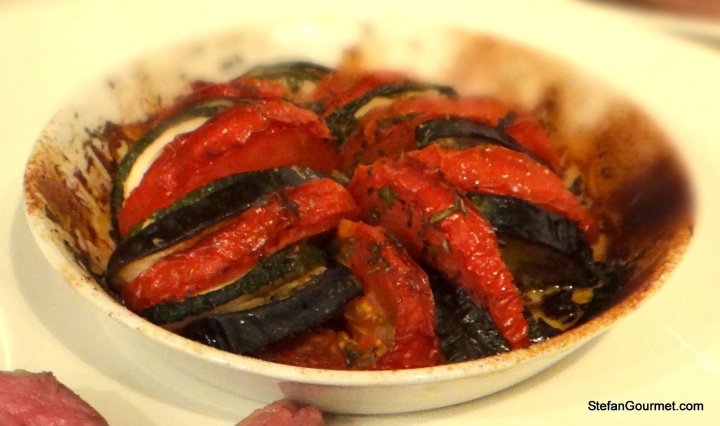
Tian Provençal

When I saw Richard McGary’s vegetable tian, I knew I’d prepare one too. A tian is actually named after the traditional earthenware dish they are made in. There are vegetable tians, meat tians, and fish tians. I wanted to prepare a tian as a side dish, and so I chose a very traditional tian provençal with eggplant, zucchini, and tomato. Don’t let the simplicity fool you: this tian bursts with flavor anyway thanks to the slow roasting and the herbes de provence. I do not own an actual tian from Provence. For presentation purposes I opted to make single serving mini tians using small ovenproof dishes, but that did mean that it was more difficult to neatly arrange the sliced vegetables. Continue reading “Tian Provençal”

Cooking in the Outback

Thanks to the wonders of scheduled posts, new recipes are posted on a regular basis while I am actually travelling through the Australian Outback in a camper van with very limited internet access and an even more limited kitchen. Even though it’s even more sparsely populated around here than in the South-Western USA that we were touring last year, the supermarkets here are well-stocked and so we’ve not been lacking in terms of nice food. Continue reading “Cooking in the Outback”

Fennel Pasta

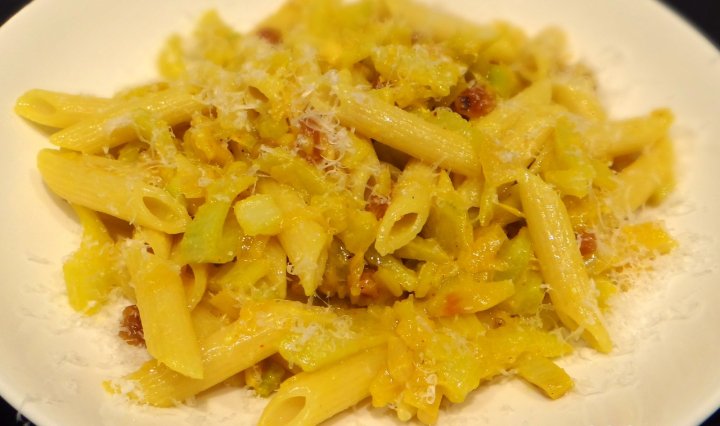
I had fennel left over after making fennel polpette using only the greens. I decided to use the fennel to make a Sicily-inspired pasta dish with raisins, pine nuts, and saffron. When I made this for the first time, I thought it was a bit bland. Now I added sugar and parmigiano and the result is very tasty. The flavors of the raisins, saffron, and fennel work together very well and are supported by the pine nuts and parmigiano. This is a nice vegetarian pasta dish that I will make again. I am not sure if it resembles any traditional Sicilian pasta dish. Continue reading “Fennel Pasta”

Grilled Octopus with Octopus Sponge, Bell Pepper Coulis and Romanesco

This is another dish that came out of the collaboration with Teun and Albert. I wanted Teun to try octopus sous-vide, and I remember how much I liked the char-grilled octopus at La Madia in Sicily. Although we ended up doing something different, our original idea was to do something along the lines of the octopus dish from La Madia. That dish featured a rock. Due to timing constraints (and also because the rock at La Madia wasn’t very tasty even though it looked great), we decided to go for a soft octopus sponge cake instead.

Recently, Paul of That Other Cooking Blog wrote about a microwave brioche. This is a trick that was originally devised by Ferran Adrià of El Bulli. A batter with a lot of eggs is siphoned into paper cups with nitrous oxide and then cooked for 30 seconds in a microwave oven to get a sponge cake. As octopus leaks a lot of juices when cooked, we thought it would be nice to reduce those juices to a thick octopus syrup and use that to flavor a sponge. We thought it would pair well with a bell pepper coulis, and when we realised our menu needed more vegetables we also included some oven-roasted romanesco (green cauliflower). Continue reading “Grilled Octopus with Octopus Sponge, Bell Pepper Coulis and Romanesco”

My First Poke

We eat most fish on Fridays and Saturdays, since I prefer to eat fish on the day that I bought it. The well-known Albert Cuyp market in Amsterdam is just a few blocks from the office, and I should take more advantage of that to go there and get fish during my lunch break so we can have fish on other days of the week as well as we both love fish.

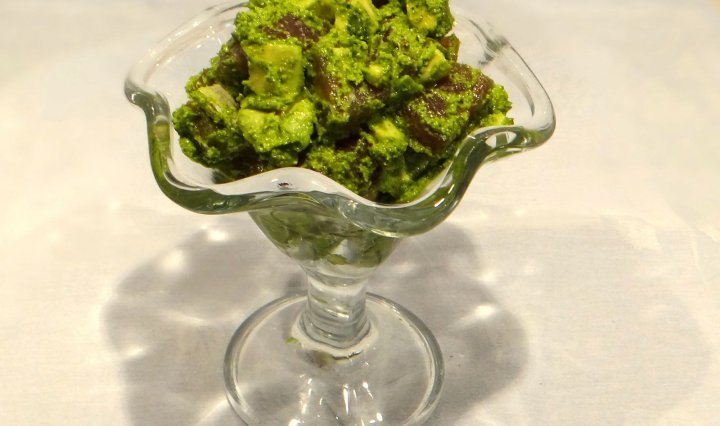
When I was on the Albert Cuyp market I saw some nice tuna and thought it was time I would give ‘poke’ a try. Poke is a Hawaiian dish that I had never heard of before, despite having been to Hawaii for a week two years ago. I had noticed it on Richard McGary’s blog REMCooks.com before, but only when I saw the photo of the Baby Lady smugly enjoying poke I knew I really had to try this 🙂 I was not disappointed, as we both loved it and I will definitely make poke again.

Poke is a Hawaiian dish made with raw tuna (called ahi in Hawaii, either big eye tuna or yellowfin tuna) and a variety of other ingredients. I based my first attempt upon Richard’s post about Pesto Poke, but I added some avocado as well and replaced the cilantro with parsley.  Continue reading “My First Poke”

Eggplant Caprese Pasta Salad

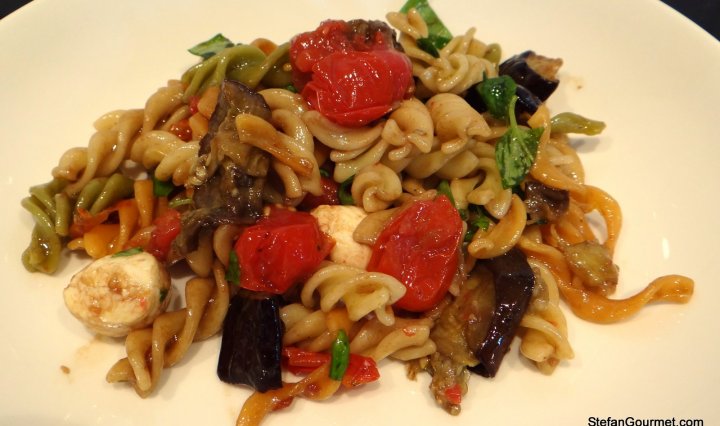
Pasta salads are great summer food and perfect as a side for a cook out. I like to prepare pasta salads with lots of vegetables, as a cook out or BBQ as we call it here usually involves a lot of meat. For some variation from a Greek style pasta salad, I prepared this pasta salad with eggplant, mozzarella, tomatoes, basil, and balsamic vinegar. These flavors go together very well, also without pasta. Continue reading “Eggplant Caprese Pasta Salad”

Apricot Tart (Limburgse Abrikozenvlaai)

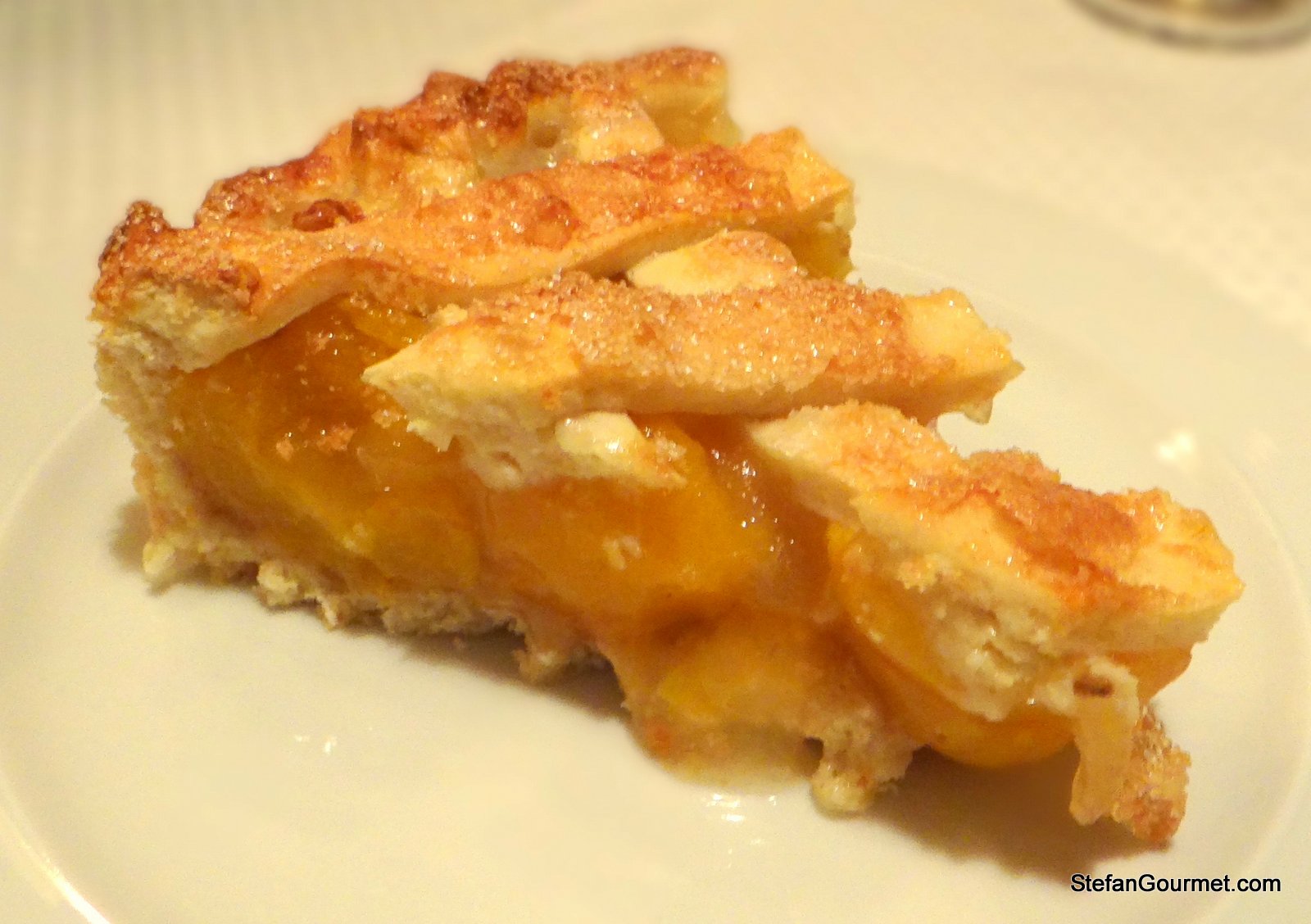
The dinner I cooked for Clayton when he visited had to contain something Dutch. After some thinking, I came up with Limburgse abrikozenvlaai, a tart from the province of Limburg that is made with a yeasted dough. I already wrote about kersenvlaai (with cherries) a while ago. Since it’s summer, fresh apricots are available. The apricots are cooked before they are used in the vlaai.

DSC08710 Continue reading “Apricot Tart (Limburgse Abrikozenvlaai)”

Tagliatelle alle Zucchine

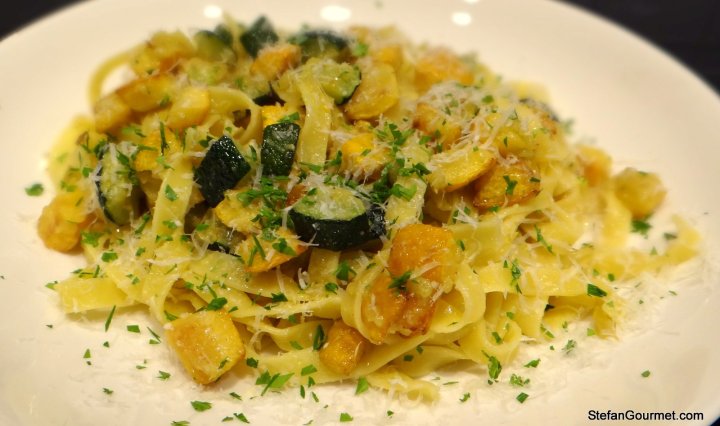
This time of the year zucchini or other types of squash are abundant and so I decided to create a recipe for pasta with zucchini. To give the dish a nice flavor and a nice texture, I separated the seeds from the firmer flesh. I diced the firm part and sautéed the diced zucchini briefly over high heat. I chopped the soft part very fine and cooked it to a ‘sauce’ together with an onion and white wine. The resulting dish was very nice with a lovely flavor and texture just like I intended. Here’s what I did… Continue reading “Tagliatelle alle Zucchine”

Parsley-Crusted Steak with Mushroom Ketchup and Garlic Puree

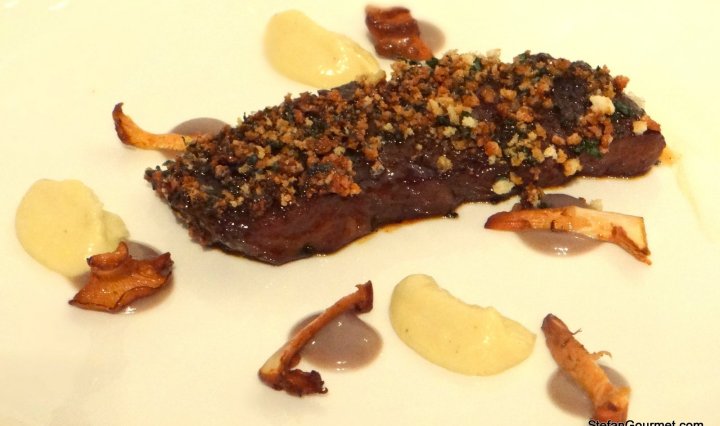
One of the best ways to become a better cook is to learn from others. I asked my modernist cooking friends Teun and Albert to join forces with me to create dishes together. This dish is the first result of that collaboration. It was loosely based upon a dish that Albert had cooked before out of the Big Fat Duck cookbook. We wanted to do something with wagyu sous-vide. The idea for the mushroom ketchup came from the Big Fat Duck dish. As parsley and garlic are friends of mushrooms in Italian cuisine, we decided to coat the steak with parsleyed bread crumbs and serve it with a garlic puree.

For me the main success of this dish was the crust. The wagyu flank steak was very tender and flavorful because it had been cooked sous-vide, and had additional flavor because it was finished on a charcoal grill. The tender beef was complemented very nicely by the crunchy parsley crust. The combination with the mushroom ketchup, mushrooms, and the garlic puree also worked very well. Continue reading “Parsley-Crusted Steak with Mushroom Ketchup and Garlic Puree”

Seafood Cous Cous

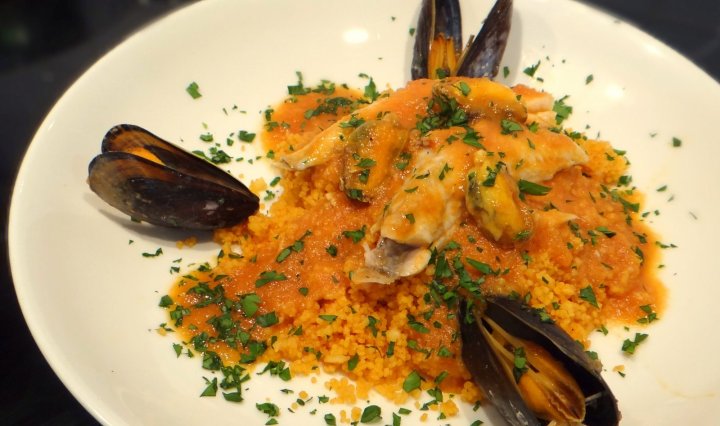
The final dish in the series of Sicilian dishes I cooked for my parents is a seafood cous cous. I’m hesitant to refer to it as “Cous Cous Siciliano”, because I used a few shortcuts. You see, traditional cous cous in Sicily is made from scratch from coarse semolina flour and water, and then steamed in a terra cotta pot with holes in the bottom called a cuscussiera. The cuscussiera is sealed to the pot with simmering water underneath by a simple dough of flour and water. Instead, I used store-bought cous cous (also made from semolina flour) and followed the instruction on the package for cooking it, which says: combine the cous cous with an equal amount of hot water or stock, cover, and wait 7 minutes. That is indeed a whole lot easier, and although I didn’t do a side by side comparison the cous cous didn’t seem any different from what I remember from trying it in Sicily.

In Sicily, cous cous is flavored with bay leaf, cinnamon, almonds, parsley, onion, and garlic, and served with a tomato-fish stock and fish. I made up this recipe using this general guideline and using gurnard (“rode poon” in Dutch) and mussels as the seafood and we loved it. They keys to great cous cous are fresh fish, homemade stock, and not overcooking the fish. When using store-bought cous cous, it’s not that hard.  Continue reading “Seafood Cous Cous”

Sarde a Beccafico (Stuffed Sardines)

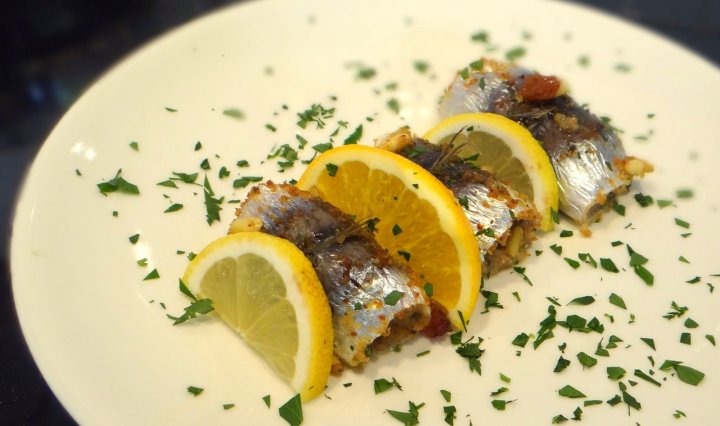
Apart from the fennel balls, I prepared another antipasto for my Sicilian dinner: Sarde a Beccafico. We really liked this dish when we had it at Tischi Toschi, and I copied the presentation from there. Sarde a Beccafico can be served either as antipasto or as secondo (main course). Sardines are stuffed with bread crumbs, raisins, anchovies, parsley, pine nuts, sugar, and baked in the oven with some orange juice. This dish is very tasty and easy to prepare if you ask the fishmonger to turn the sardines into fillets for you.

Continue reading “Sarde a Beccafico (Stuffed Sardines)”

Smoked Halibut ‘Pizza’

The following I dish I prepared for the Sicilian dinner was very loosely based upon one of the appetizers at La Madia, the best restaurant in Sicily with two Michelin stars.

DSC05646
The ‘pizza’ at La Madia

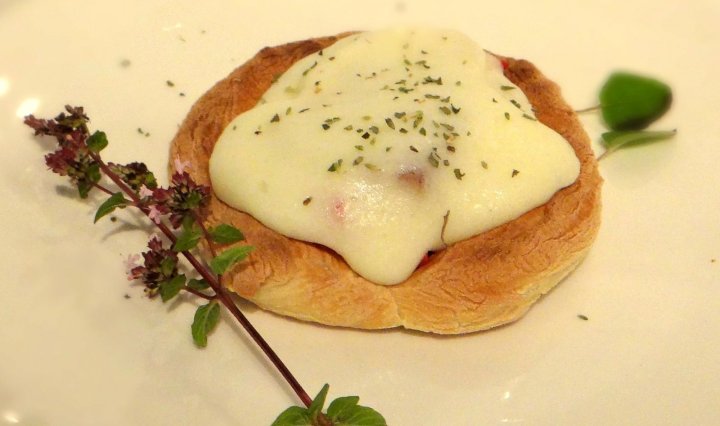
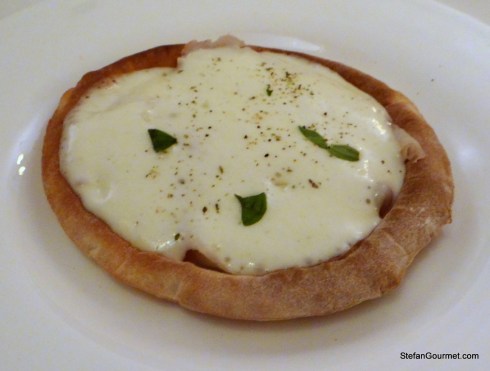
This is what I wrote about this dish in my review of our dinner at La Madia: “We were thoroughly fooled by this pizza, because we were wondering how we were going to survive 8 courses if they were all going to be this big. It turned out to be very light actually. What looks like melted mozzarella is actually potato mousse. The crust was only a very crispy very thin round of dough, and underneath the ‘cheese’ there was lovely cod smoked on pine wood and some semi-dried tomato. Great flavors and wonderful presentation. 10/10”

The dish I prepared is by no means an attempt at recreating chef Pino Cuttaia’s dish, but it has been heavily inspired by it. My ‘pizza’ was made with hot-smoked halibut, potato mousse, and semi-dried tomatoes. It was more substantial than at La Madia and I served it as a main course. Continue reading “Smoked Halibut ‘Pizza’”

Fennel ‘Meatballs’ (Polpette di Finocchietto)

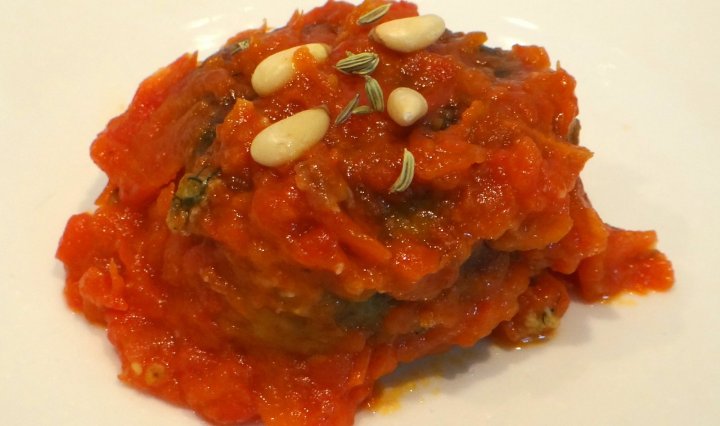
As an appetizer for my Sicilian dinner I prepared vegetarian meatballs made from fennel and dill, served with a tomato sauce. In Italy these polpette di finocchietto are made with wild fennel greens, which grow abundantly in Italy in spring. For lack of the wild fennel greens, I decided to use a mixture of fennel fronds (the green stuff on top of fennel bulbs) and dill. We loved the polpette di finocchietto during our wonderful dinner at Tischi Toschi, the best trattoria of Sicily in the port town of Messina. I did not ask for the recipe, so this is my own version. They came out great with a lot of flavor. If you’d like to cook vegetarian, this is also very suitable as a main course. Continue reading “Fennel ‘Meatballs’ (Polpette di Finocchietto)”

Cassata Siciliana

In April we travelled through Sicily and I came back with a lot of ideas for Sicilian dishes to cook. Last night my parents came over for dinner, and for the first time since I can’t remember I prepared five all new dishes in a single day. All of them inspired by meals we had in the best restaurants of Sicily. My parents don’t mind being guinea pigs, and although I have thought of some improvements for the next time I make these dishes, all of them came out very tasty if I do say so myself. Since it’s been so long that I’ve blogged about dessert, I’m starting at the end.

DSC05563-001
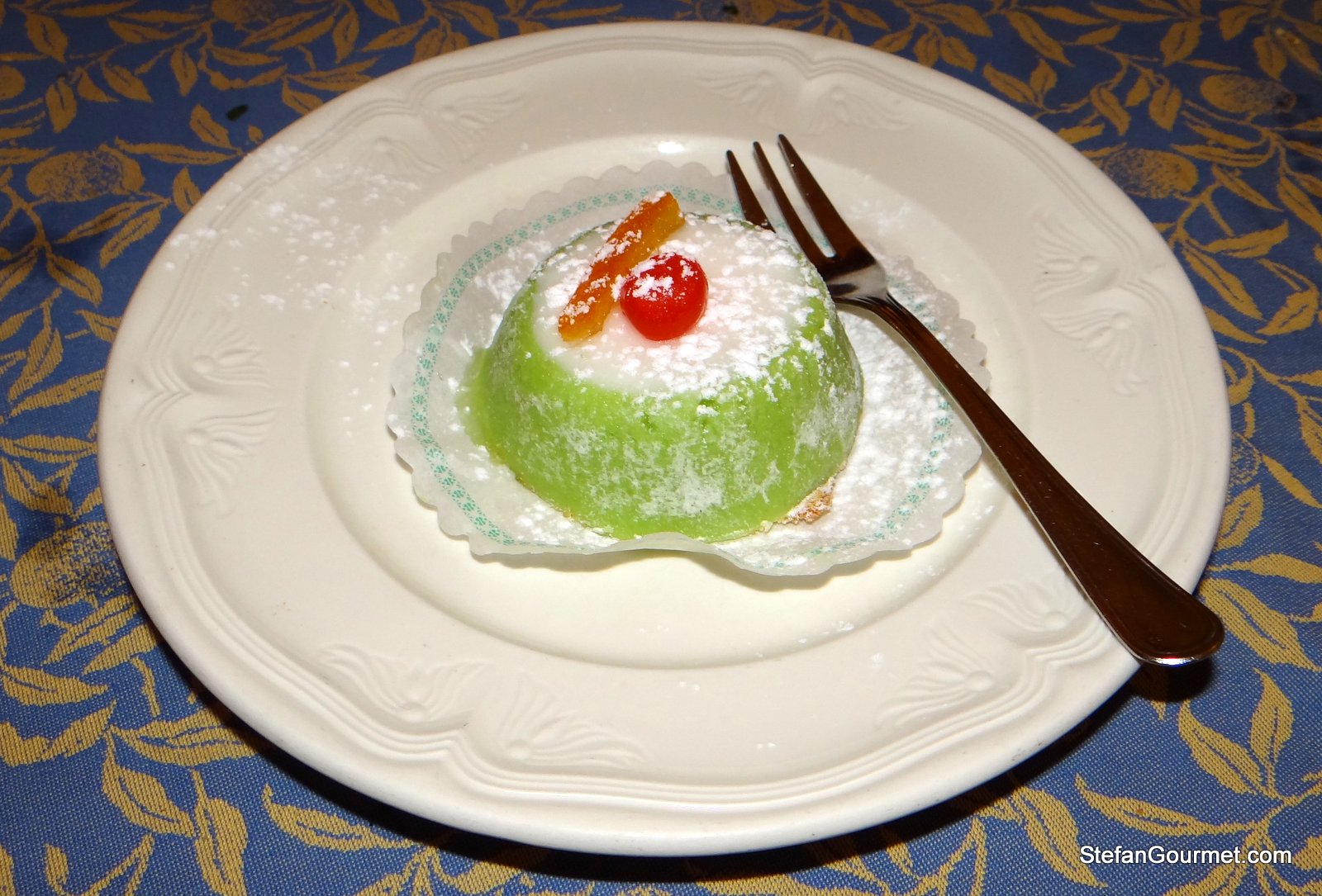
Cassatina in a trattoria in Erice

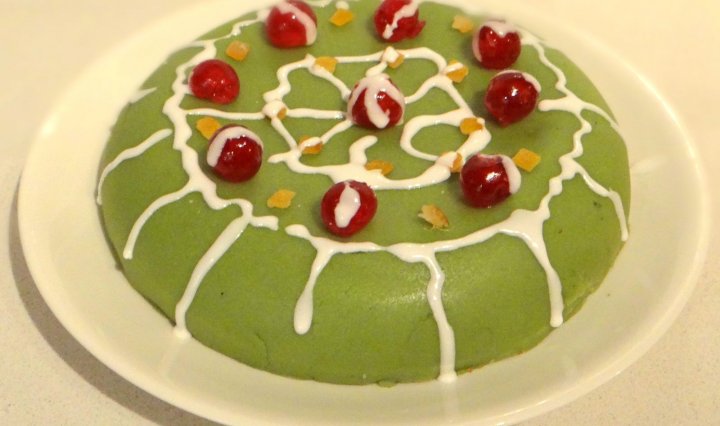
Cassata is a traditional cake from Italy made with sweetened ricotta, marzipan, candied fruit, and sponge cake (pan di spagna). Cassata can be decorated very elaborately with different kinds of candied fruit and icing, but when we had it for dessert in restaurants in Sicily, we got a single-portion cassatina that was decorated quite simply with a few pieces of candied fruit and icing. Since I had five different dishes to prepare in a single day, I decided to go for the simple option. Perhaps I’ll do a more baroque version in winter with homemade candied fruit and homemade marzipan. Continue reading “Cassata Siciliana”

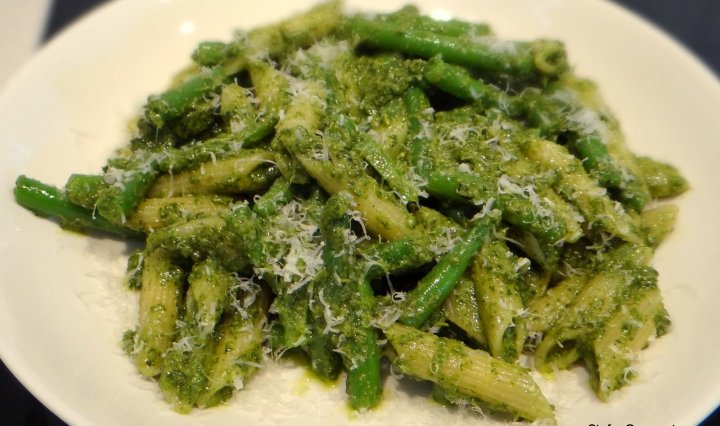
Pasta with Green Beans and Savory Pesto (Pasta ai Fagioli e Pesto di Santoreggia)

Green Beans (also known as String Beans or French Beans) are in season right now, which means that beans from around here are abundant and we don’t have to make do with imported stuff from Northern Africa.  Green beans and haricots verts are essentially the same thing, but the name “haricots verts” outside of France is usually reserved for the thinnest ones only.

Some months ago Richard of REMCooks.com posted a chicken recipe that used a herb called savory. I thought I had never heard of savory before, but that wasn’t entirely true because I did know it under the Dutch name “bonenkruid” even though I didn’t remember ever tasting it. The name “bonenkruid” suggests that it’s good with beans (it means “bean herb”) so when I saw a fresh savory plant at the produce department, I decided to try making pasta with green beans and savory pesto. The savory pesto has a punchy taste, very savory indeed, and did go great with the beans. The savory smells a bit like fresh oregano, but the taste is stronger. Thanks Richard for the inspiration. Here’s what I did…
Continue reading “Pasta with Green Beans and Savory Pesto (Pasta ai Fagioli e Pesto di Santoreggia)”

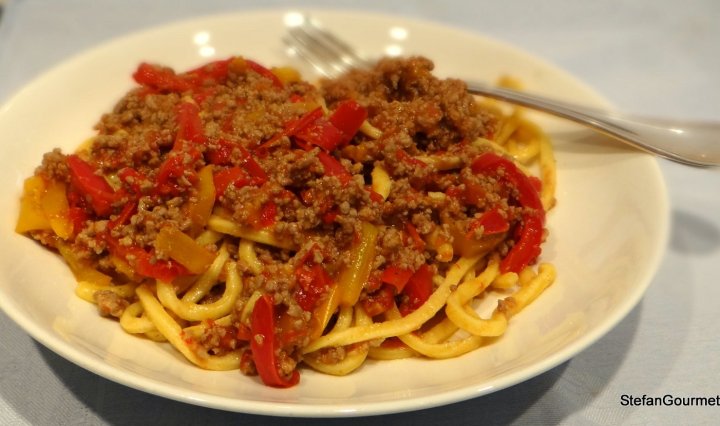
Spaghetti alla Chitarra con Ragù di Agnello e Peperoni (Fresh Pasta with Lamb and Bell Pepper Sauce)

Next time I’ll be visiting the Italian region of Abruzzo I’ll have to watch out, because I’m cheating in this post. Every region of Italy has its own pasta shapes, and for Abruzzo this is the Spaghetti alla Chitarra, also called Maccheroni alla Chitarra. In other regions this type of pasta is called tonnarelli or troccoli.

Spaghetti alla Chitarra are thick square fresh egg noodles, made from semolina flour and with a thickness and width of 2 to 3 mm (1/12 to 1/8 inch). They are called “alla chitarra” because they are traditionally made with a guitar-like device, which has a wooden frame strung with metal wires. The pasta dough is first rolled out with a rolling pin, then arranged on top of the metal wires, and then a rolling pin is used to press the pasta through the wires and thus cut it. You guessed it: chitarra is the Italian word for guitar. The device helps to give the pasta a rough surface, ideal for sauce to cling to.

I don’t own such a device, but since I do own a tagliolini attachment for my pasta roller with a width of 2-3 mm, I figured I can cheat and prepare something very close to spaghetti alla guitarra using the attachment for tagliolini. To get square pasta, the thickness of the dough should also be 2-3 mm. Spaghetti alla chitarra should be served very much al dente, with a lot of bite to them, so it is important not to overcook them.

One of the traditional ways to serve spaghetti alla chitarra in Abruzzo is with a ragù of lamb and bell peppers, flavored with garlic and bay leaf, and that is what I dressed the spaghetti alla chitarra with. It turned out wonderfully and I will definitely make this again. The ragù is made with fresh tomatoes and has a very elegant taste. Continue reading “Spaghetti alla Chitarra con Ragù di Agnello e Peperoni (Fresh Pasta with Lamb and Bell Pepper Sauce)”
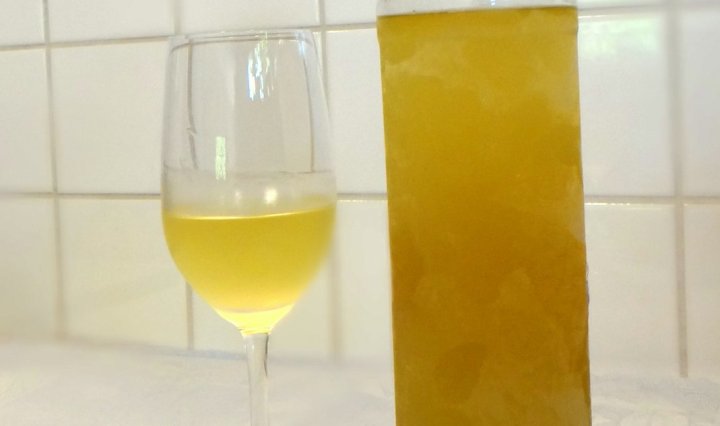
Homemade Limoncello

Limoncello is an Italian lemon liqueur with the nice fresh taste of lemons. It is easy to make yourself, and in many trattorie in Italy it is customary to get a glass of ice cold homemade limoncello on the house when you get the check. As with many Italian recipes, the quality of the ingredients (in this case the lemons) is important, and the ingredients are not always simple to find (in this case 95% pure alcohol). 95% pure alcohol is difficult to find and expensive in the Netherlands, but in Italy it is sold by every supermarket. So I brought some home from my latest trip.

Since you will be infusing the liqueur with the zest of the lemons, they need to be ‘untreated’. Most lemons (and oranges) are treated with wax. Since you’d like to make a lemon liqueur rather than a wax liqueur, you need untreated lemons. The best lemons are those from the Sorrento peninsula, but you may be hard pressed to find those.
Continue reading “Homemade Limoncello”

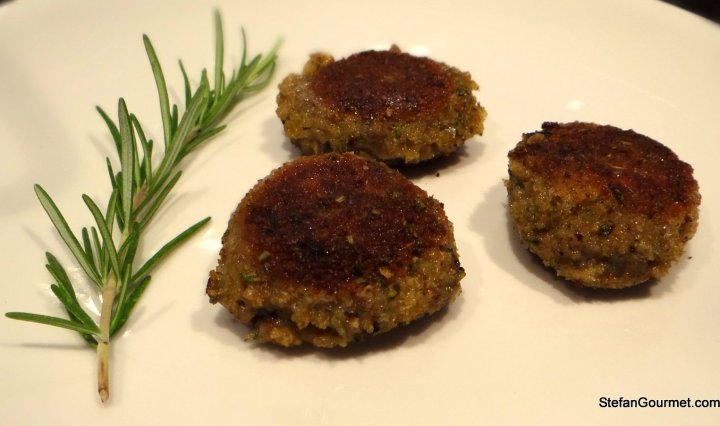
Lamb and Eggplant Meatballs

Just a week after returning from my cooking on the boat adventure I have another challenge lined up, as we are participating in the gay pride canal parade in Amsterdam this Saturday and that requires a lot of preparation. As a result, I’m not cooking very elaborately this week and nothing that I haven’t blogged about before. I had some leftover lamb and eggplant ravioli stuffing in my freezer, and since I prefer to make the stuffing fresh when making ravioli for guests, I decided to turn the stuffing into meatballs by breading and frying them. This turned out great: the outside of the meatballs is nicely crispy, whereas the inside is very soft and juicy and tasty. These meatballs are so good, it would be worth making the stuffing just to prepare them.

Continue reading “Lamb and Eggplant Meatballs”