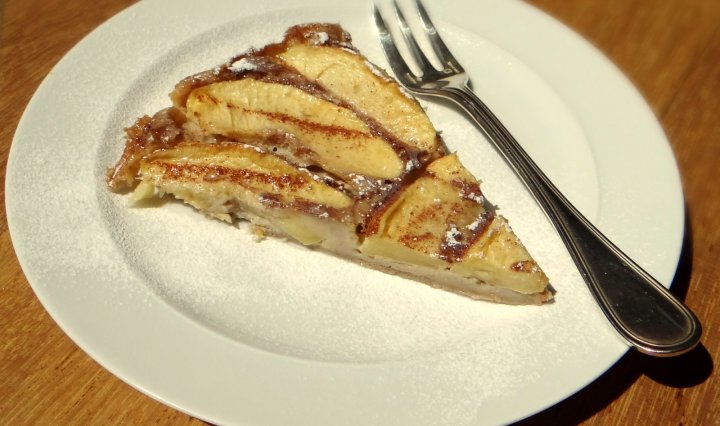
For the Burgundian evening there also had to be a traditional dessert from Burgundy. I decided to prepare flamusse, an apple flan that is similar to clafoutis (made with cherries). This is a very an quick simple cake/dessert to make, but really tasty. The important thing is to use only a bit of batter and not to beat too much air into it, otherwise the flan will rise too much and although it will still taste good, it will look quite messy. Continue reading “Flamusse aux Pommes (Burgundian Apple Flan)”
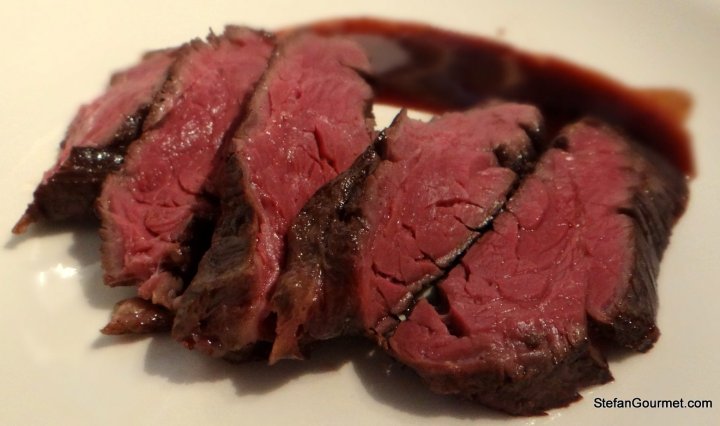
Hanger Steak is a lesser known but very flavorful cut of beef. It has so much flavor because it comes from the diaphragm that is needed for breathing, and has therefore had a lot of use in the life of the steer or cow. Hanger steak is called onglet in French, and longhaas or karweivlees in Dutch. It is best when served medium rare, but it can be slightly tough when prepared like a regular steak. With sous-vide we can fix this, because we can cook it for a longer time without taking it over medium rare or we can apply the technique that I have called warm aging.
It is possible to tenderize beef by boosting the activity of calpain and cathepsin enzymes in the meat through bringing the meat to temperatures of 39.5C/103F for calpains and 49.5C/121F for cathepsins. These are the same enzymes that are at work when meat is aged at refrigerator temperatures (both for dry aging and for aging in vacuum), but much faster and (compared to dry aging) without drying the meat. If you can find dry aged hanger steak there is no need to apply warm aging, but I don’t expect this to be a cut that is available dry aged. I finished cooking the steak at 55C/131F for medium rare. You could also cook it longer at 55C/131F instead of applying warm aging, but the meat would turn out less juicy and a bit more like medium. Continue reading “Hanger Steak Sous-Vide”
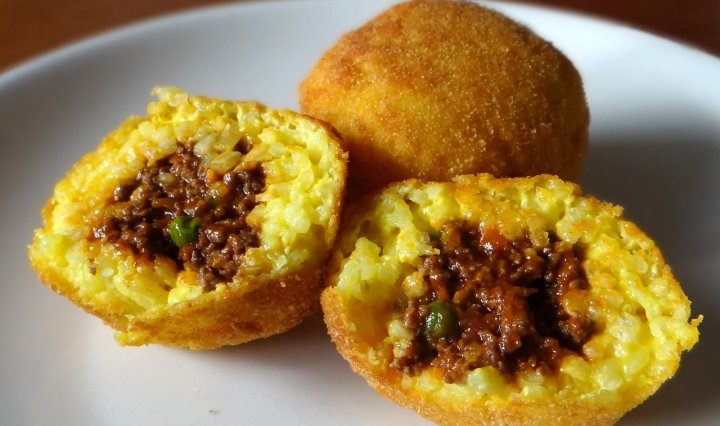
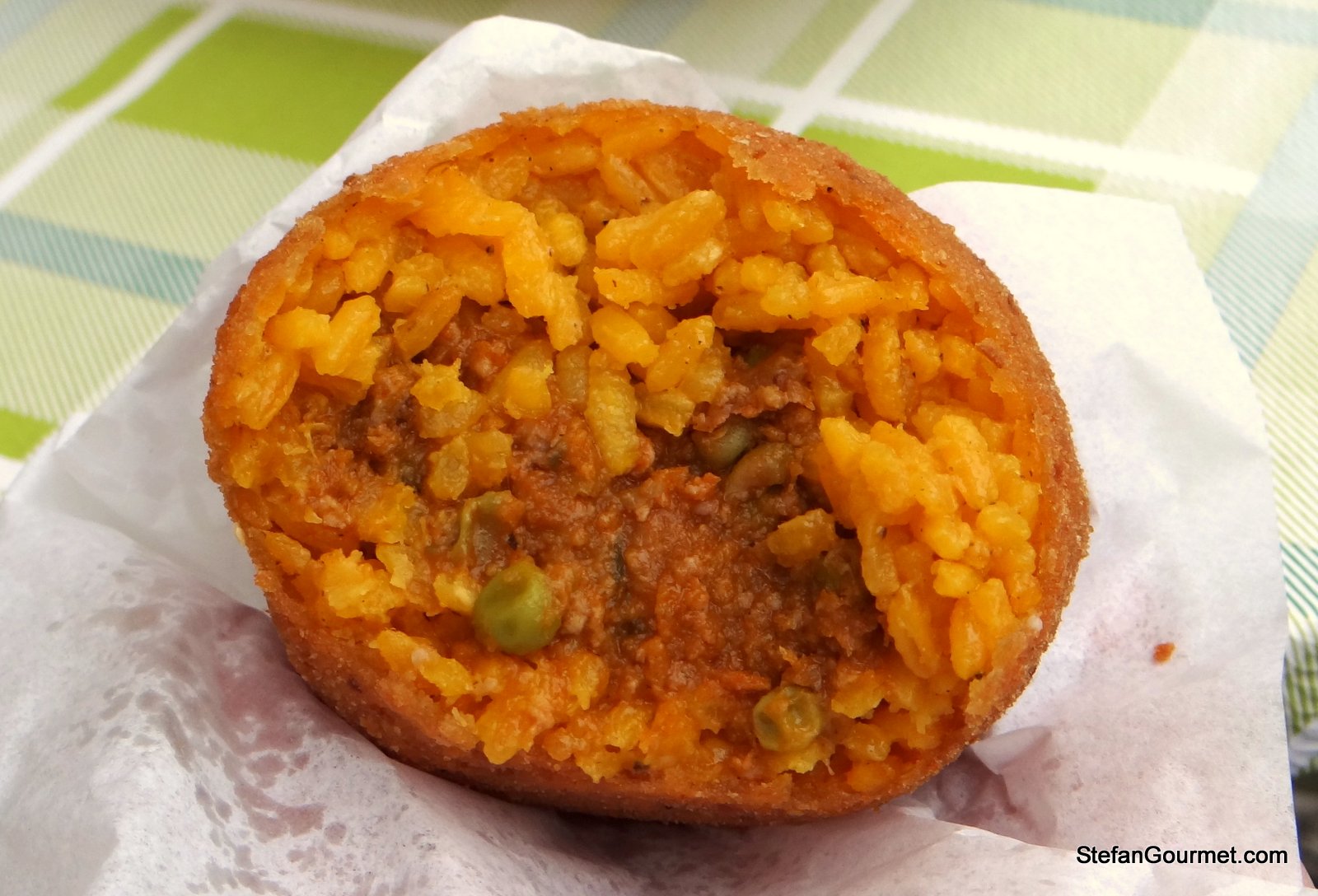
Without a doubt, the regional snacks of Sicily are arancine or arancini. These are deep-fried balls of rice, stuffed most often with a ragù (meat sauce) and peas, but also with other stuffings such as cheese. Arancini are everywhere in Sicily, and we liked them so much that we had them for lunch almost every day during our trip.
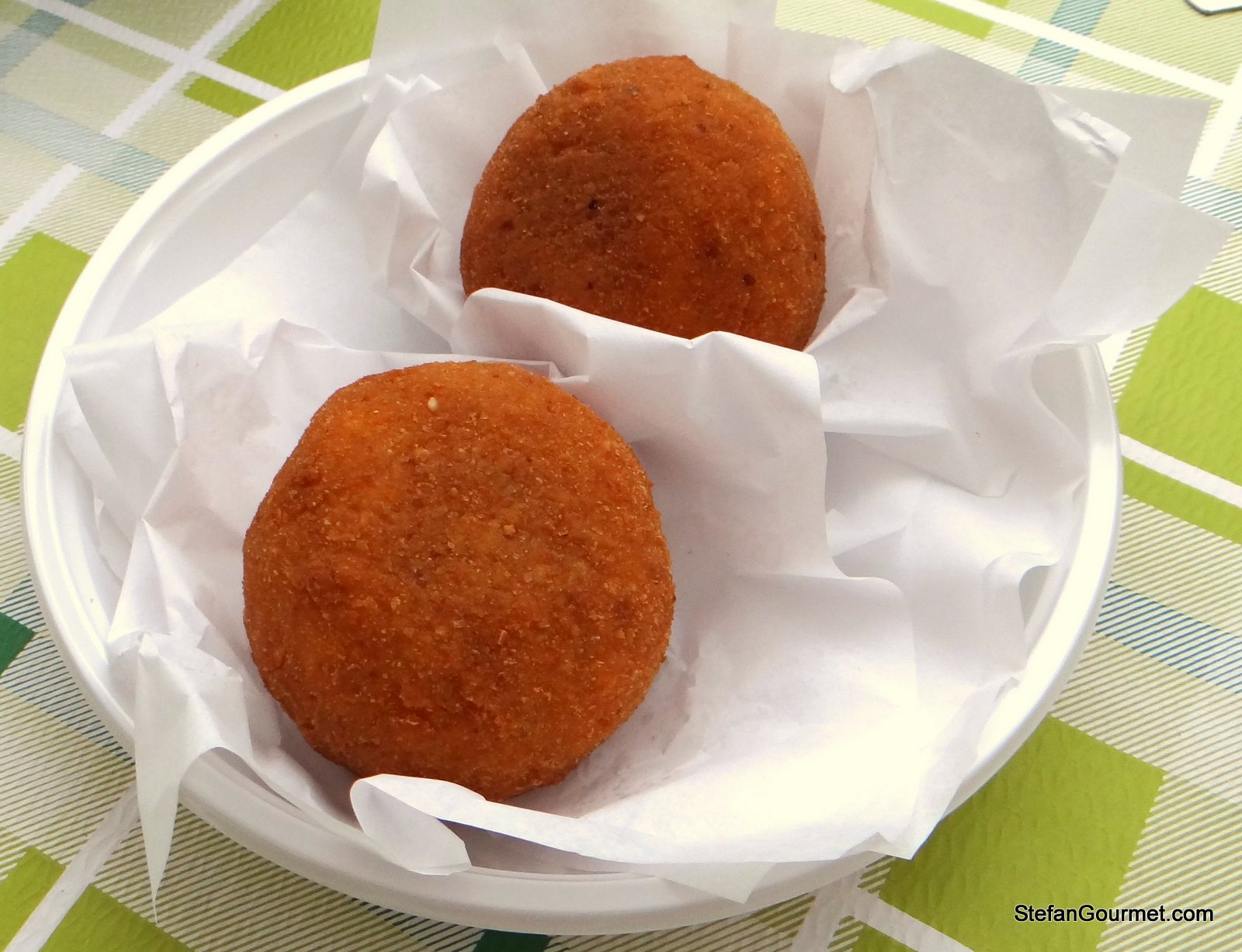
Arancini for lunch in Monreale (near Palermo)
Arancini have been named after oranges (arancie), because they look so much like them. In the West of Sicily they have a round shape and are female (1 arancina, 2 arancine), whereas in the East of Sicily they are pear-shaped and are male (1 arancino, 2 arancini). This could mean that the eastern name is more ‘Sicilian’, because oranges are male in Sicilian (arànciu) contrary to female in Italian (arancia). I entitled this post arancine because I made round ones, but I like the sound of arancini better so that’s how I’ll call them.
Looking inside: rice, ragù and peas
After coming home, arancini were high on my list of Sicilian delicacies to prepare. They turned out to be relatively easy to make and very good. When we had arancini for lunch in Sicily, they had been lying in a display case for a while and were heated up in a microwave oven. This has an advantage that the flavors have the opportunity to blend, but the crust is not crispy. My homemade arancini were freshly deep-fried and thus very crispy. Next time I’ll make them earlier to allow the flavors to blend before deep-frying them. But even deep-fried straight away they were delicious! Continue reading “Arancine (Sicilian Rice Balls)”
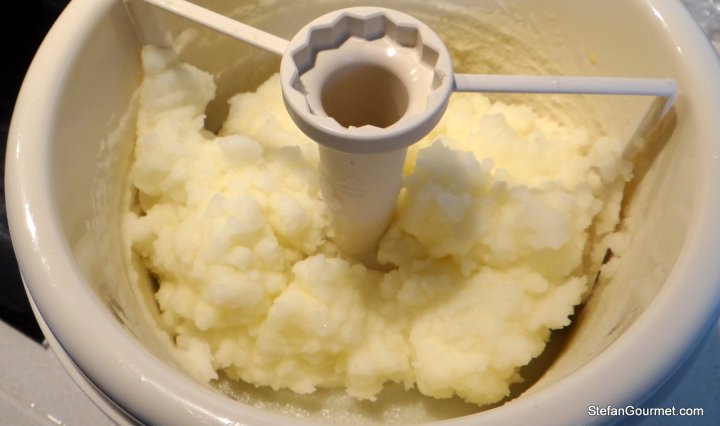
I’m making homemade limoncello with the 95% alcohol I brought from Italy. (I will post about the limoncello in a few months, as it requires 10 weeks to make it.) One bottle of limoncello requires the zest of five lemons, so I ended up with five zested leftover lemons. What to do with the juice? I decided to make homemade lemon sorbet. It’s very easy to make if you own an ice cream maker: simply mix the juice with a simple sugar syrup and let the ice cream maker do the rest. Lemon sorbet can be served as a palate cleanser, or be used for an Italian drink called sgroppino, about which I will do a post later. For now, here’s how to make lemon sorbet. Continue reading “Homemade Lemon Sorbet”
The types of flour available in Italy are different, or at least labeled differently, from flour available elsewhere. Two types, farina di grano tenero 00 and semola di grano duro rimacinata are available more and more outside of Italy because we like to use them to make pizza and pasta. Grano tenero means soft wheat and is used for pastries. Even though it is referred to as tenero in Italy, farina 00 can be high-gluten to use for pizza or fresh egg-based pasta as well as low-gluten to be used for cakes. Grano duro means hard wheat (durum wheat) and is used for dry pasta as well as water-based fresh pasta in Southern Italy. If you buy flour that is labelled as ‘all purpose flour’, you don’t really know what kind of flour it is. It probably has low gluten and then will be unsuitable for making pizza or pasta. For making bread with a long rising time such as ciabatta, flour with a very high amount of gluten is used in Italy. This flour is called farina Manitoba, and is named after the province in Canada where this wheat is being produced. The high amount of gluten makes it ‘strong flour’, which means that the dough can rise better.
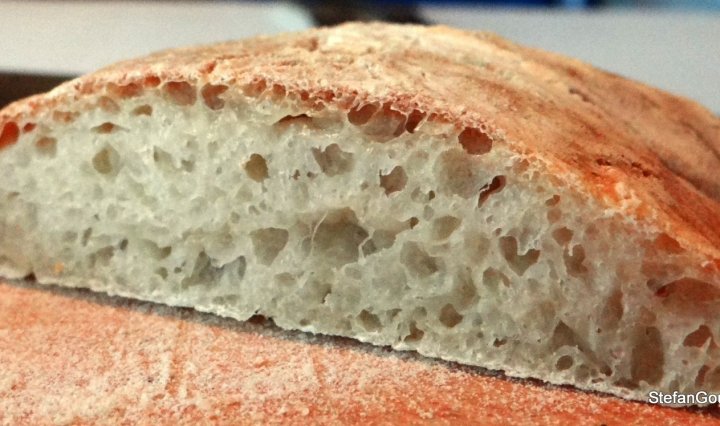
I haven’t found a source for Manitoba flour in the Netherlands, but I was curious about the difference with bread flour as it is available here and so brought a bag of farina Manitoba from Italy. I used to farina Manitoba to bake ciabatta bread for the first time, and I was very pleased with the result. For ciabatta the long rise is crucial to give it the characteristic airy texture and crispy crust. I’ve based the recipe on that of GialloZafferano.it. It is interesting to note that three different types of flour are required to make ciabatta: 00, manitoba, and semolina. The latter is used as a ‘gluten coat’ for the rising and for the crust. Continue reading “Homemade Ciabatta”
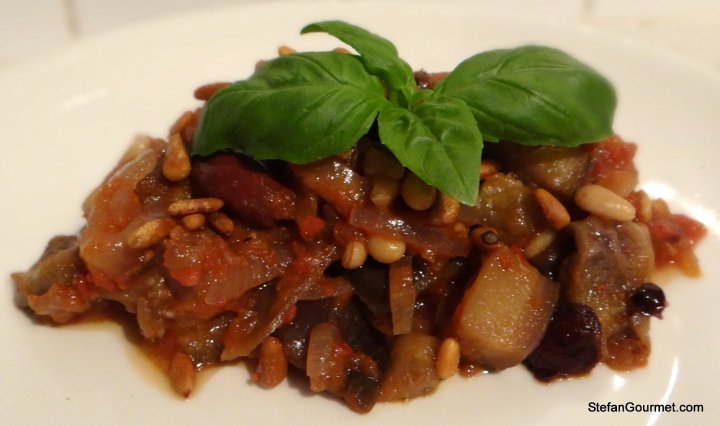
Caponata is a sweet & sour Sicilian dish, consisting of eggplant simmered in tomatoes with other ingredients such as olives and pine nuts. It is eaten either as antipasto (appetizer) or as contorno (side dish) and can be served warm or at room temperature. As with many traditional Italian dishes, there are a lot of different versions of Caponata. I like a slightly ‘minimalistic’ version that does not have too many ingredients. Continue reading “Caponata”
I love it when someone prepares one of my recipes, and I love it even more when someone lets me know how it turned out!
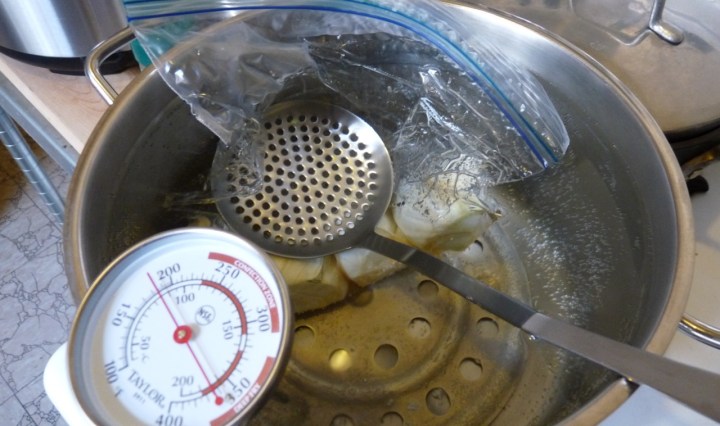
Recently I did a post on Fennel Sous-Vide Fondant. I bet some of you are curious about sous-vide after reading about it on this blog, but haven’t tried it yet because the equipment is pricey. Well, some recipes can be made without owning expensive equipment. One of my readers, Clayton from San Francisco, reacted as follows:
Fennel is a vegetable that I have always enjoyed eating. Its anise or liquorice flavor gives salads a subtle flavor-kick which I like. But I have never cooked with it. I don’t own an electric sous-vide water bath but I do own a large stock pot and Ziploc bags. So all that’s left to make this recipe are the ingredients.
Since most of my readers do not own sous-vide equipment either, I inquired whether Clayton would be willing to do a guest post to share his results with you all. And so here, with a big thank you to Clayton, is the first ever guest post on StefanGourmet.com! Continue reading “Guest Post: Fennel Fondant Sous-Vide Without Special Equipment”
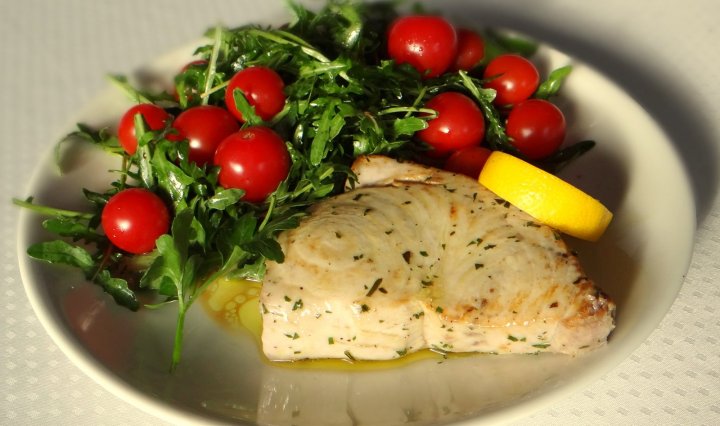
Swordfish is more meaty than most other fishes. So meaty in fact, that if the swordfish is really fresh and you cut away the ‘blood meat’, you could probably fool someone into thinking he’s eating meat rather than fish. There is one issue with swordfish and that is that it is often overcooked and dry. With swordfish this happens even more often that with other types of fish. By cooking the swordfish sous-vide, it will be very tender and juicy without risk of overcooking. The nice thing about cooking fish sous-vide is that it only takes a short time, so it is possible to cook the fish sous-vide without having a sous-vide water bath. You only need a digital thermometer for this to work. Continue reading “Swordfish Salmoriglio”
Each region in Italy has its own pasta shape, and in western Sicily around Trapani this is busiate. Like other fresh pasta from the south of Italy it is made from durum wheat flour (semola di grano duro rimacinato) and water only, no eggs. Although it is also available dried, busiate are best when freshly made. Homemade busiate are thin hollow tubes of pasta, about 7 cm (3″) in length and with a diameter of about 4 mm (1/6″). Fancier types have the same dimensions, but resemble telephone cord.
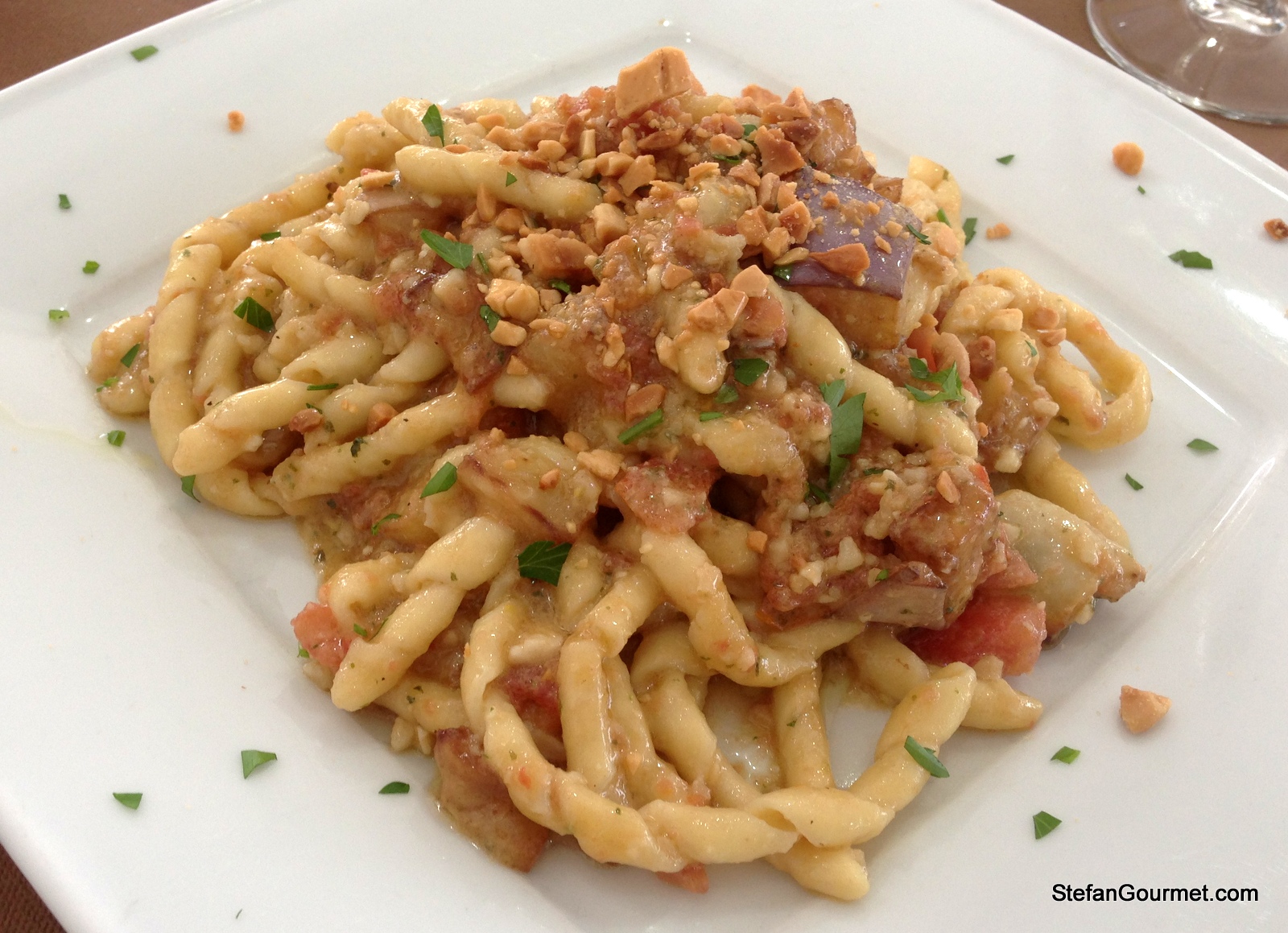
Busiate alla Trapanese as served at U Sfizziusu
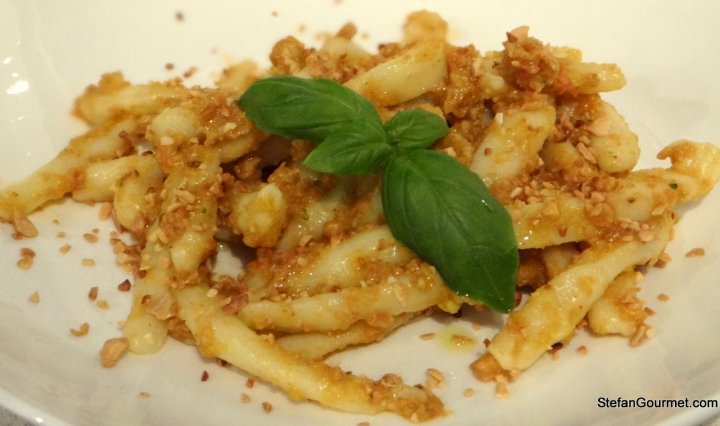
The first time I’ve ever tried busiate was at a great trattoria called U Sfizziusu in San Vito Lo Capo, a beach town close to Trapani. There I had Busiate alla Trapanese, busiate with Pesto alla Trapanese. Trapani and Genova are both port towns, and interaction between the two has introduced the concept of pesto from Genova to Trapani. Pesto alla Genovese is made with basil and pine nuts, whereas the principal ingredients of pesto alla trapanese are tomatoes and almonds. Whereas there exists an official recipe for Pesto alla Genovese, this is clearly not the case for pesto alla trapanese. Tomatoes, almonds, and garlic are in all of them. I’ve encountered version with our without (Sicilian) pecorino cheese, whereas thanks to a post by Chef Mimi I found out that Nigella Lawson even adds capers, raisins, anchovies, and chile pepper. I decided to make it as I remember it from U Sfizziusu: with minimal ingredients but great flavor nonetheless. I only left out the eggplant, because I was already serving caponata as part of the same dinner. Continue reading “Busiate alla Trapanese”
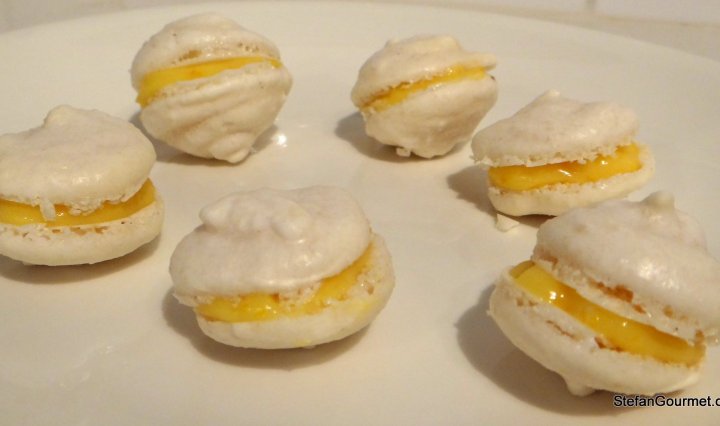
French macarons are almond and meringue-based airy cookies that are commonly filled with ganache or buttercream. The image of two macarons with filling in between has always reminded me of a hamburger, but perhaps that’s only me. I’ve had lots of macarons at the end of fancy dinners in restaurant, but until now I had never made them myself. A great post by the Cooking Chook inspired me to try making them for myself. Lo and behold: my first attempt was successful and they were outstanding stuffed with orange curd. My first attempt looked a bit rustic because I hadn’t piped the meringue very neatly, but that didn’t take away anything from the great flavor. The brittle crispiness of the shells combined very nicely with the creamy curd, and the sweetness of the almond shells went nicely with the tangy orange. Paired with a passito di pantelleria dessert wine, it was sublime. Continue reading “Macarons”
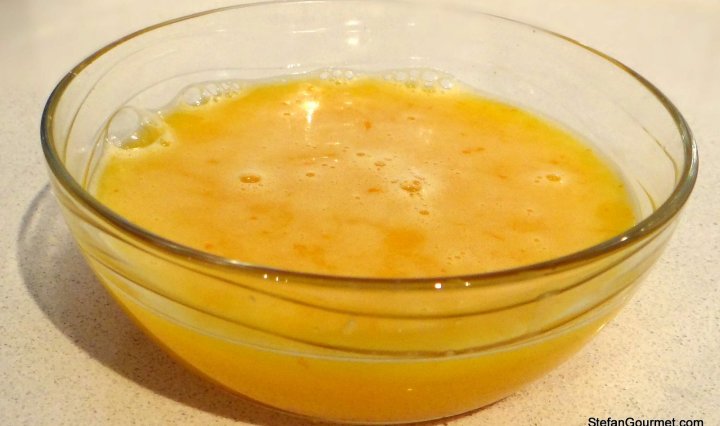
As a filling for my first attempt at making macarons (about which I will post tomorrow) I decided to make an orange curd. You see, I wanted to serve the macarons with a really nice dessert wine from Pantelleria, a … Continue reading Orange Curd
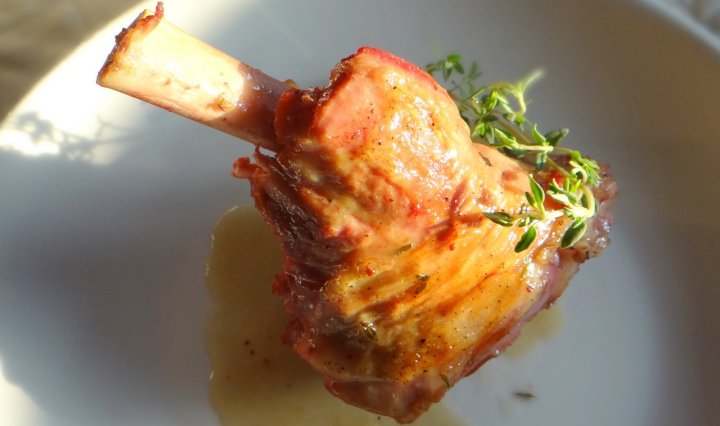
The amount of flavor in meat is determined to a large extent upon the amount of work that muscle had to do, and so shanks are very flavorful. Unfortunately muscles that do a lot of work also become tough, so … Continue reading Lamb Shank Sous-Vide
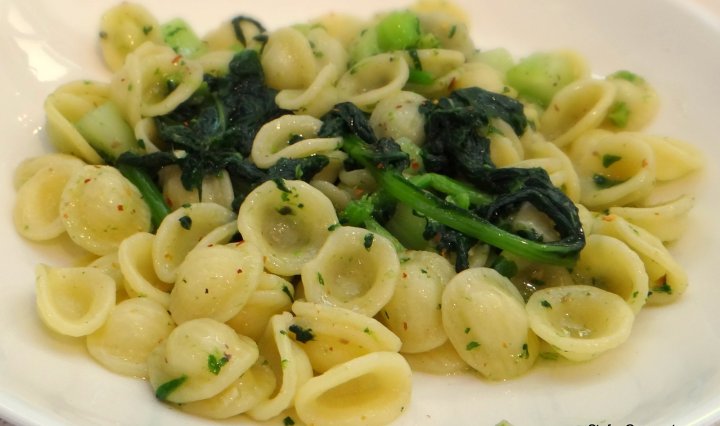
The typical pasta dish from the South-Italian region of Puglia is orecchiette with cime di rapa. Cime di rapa is a vegetable that is also known as broccoletti or rapini. It is not the same as broccoli, although the green buds in the center certainly resemble small heads of broccoli. If you can’t find cime di rapa, you can make orecchietti with broccoli instead using the same recipe. It’s not the same dish, but good all the same. This time I used dry orecchiette, but this is even better if you use home-made orecchiette instead. Orecchiette with Cime di rapa is another example of a very simple but delicious regional Italian dish. Continue reading “Orecchiette con le Cime di Rapa”
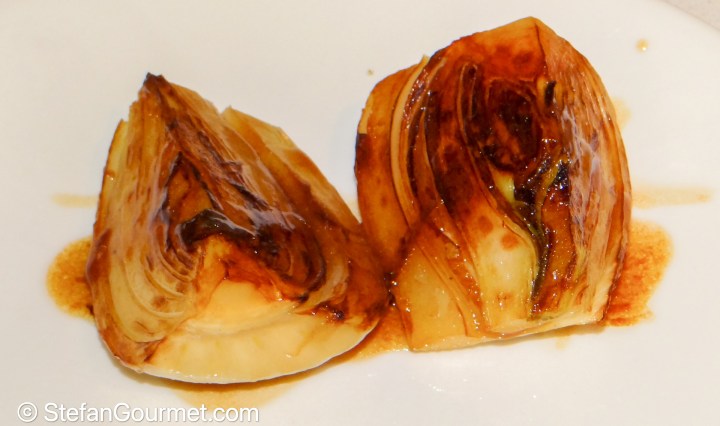
After the success of parsnip sous-vide fondant, I decided to prepare more vegetables this way. My next experiment was with fennel, and it turned out great. The recipe is very simple and very tasty. The nice thing about parcooking the … Continue reading Fennel Sous-Vide Fondant
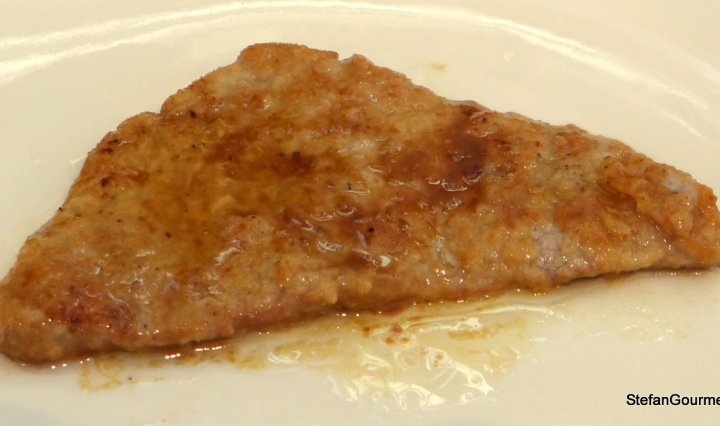
Some dishes are so simple you don’t really need a recipe to make them. But that doesn’t mean they’re not delicious. Italian cuisine is full of such recipes. This one takes less than five minutes to prepare and is a classic recipe that you can find in restaurants all over Italy (and in fact, in Italian restaurants all over the world). Continue reading “Veal Scaloppine al Marsala”
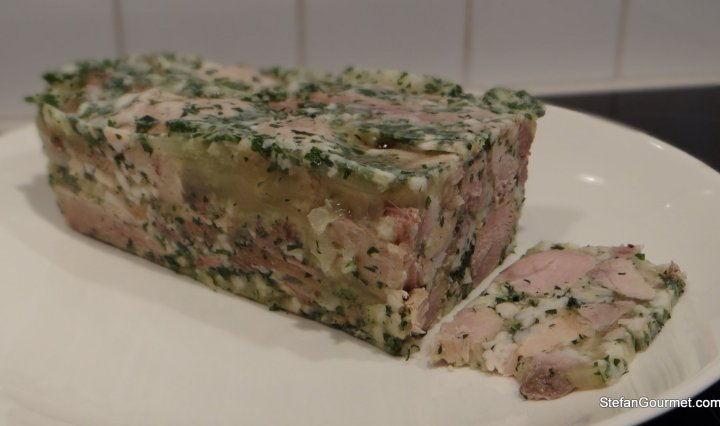
Burgundy (Bourgogne) is a region in France that is famous for its wine and its food. Three years ago we went there for a few days to discover the wine region and purchased some nice wines. When tasting white wines, often a appetizer called jambon persillé was served with it and I remember it was a good pairing. And so it was not hard to decide what kind of appetizer from Burgundy I was going to make for the Burgundian evenings I organised. Continue reading “Jambon Persillé (Ham Hock Terrine)”
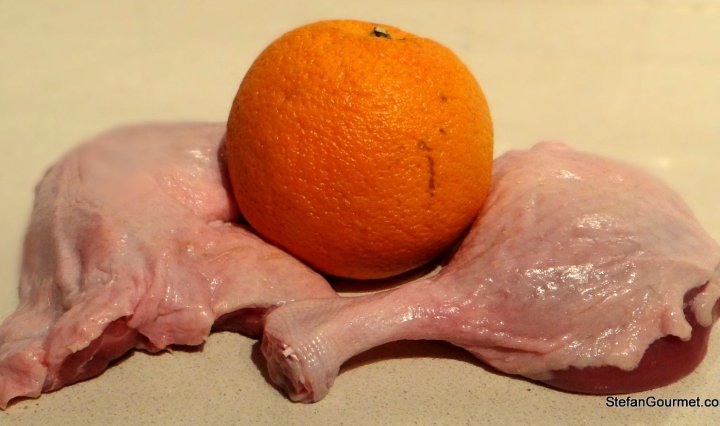
Sous-vide confit of duck leg is great, but I thought it should also be possible to do a more juicy less flaky texture. Some experimenting with times and temperatures showed me right: 24 hours at 64.5C/148F yielded tender juicy duck legs. Duck with orange is a classic combination from French cuisine, known as Canard à l’Orange. And so a very simple but very stylish and tasty dish was born. Ingredients? Duck legs, an orange, salt and pepper, and a teaspoon of honey. That’s it! The duck is cooked in its own fat. Perfect simplicity or simple perfection? Continue reading “Duck Leg a l’Orange Sous-Vide”
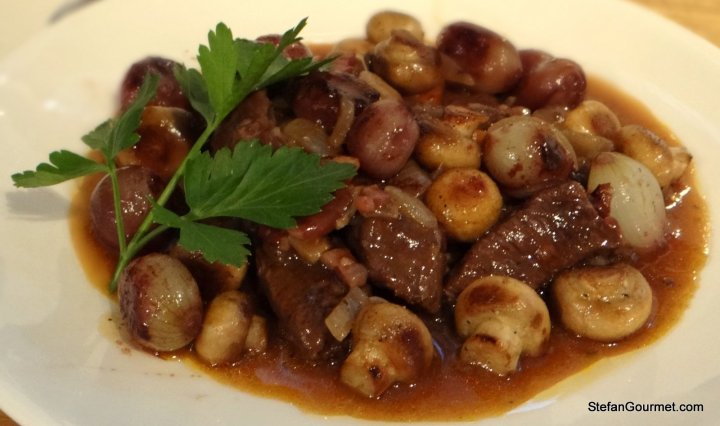
Although I purchased my pressure cooker for making stocks, I thought it would be nice to try making a pressure-cooked stew as well. Pressure cookers are known as “fast cookers” (or actually “fast cooking pan”, “snelkookpan”) in Dutch, and in this case it is true because stewing beef in a pressure cooker only takes 20 minutes instead of 3 hours. Stating it like that is cheating a bit, because after those 20 minutes you need to wait for about half an hour for the pressure to go down. But still, it still means that you only have to start cooking 75 minutes or so before you’re having boeuf bourguignon and that is kind of nice. Continue reading “Pressure-Cooked Boeuf Bourguignon”
Home-made stock is an important success factor to many dishes and sauces. It is vastly superior to bouillon cubes and in most cases also better than anything else you can buy in a store. It’s not hard to make — it just takes a bit of time. After the success of pressure-cooked chicken stock I am a strong supporter of using a pressure cooker to make stock (with the most important reason more flavor, not the shorter cooking time), and so I also prepared this beef stock in my pressure cooker. You could however also prepare it in an ordinary pot and it will still turn out great. Continue reading “Brown Beef Stock”
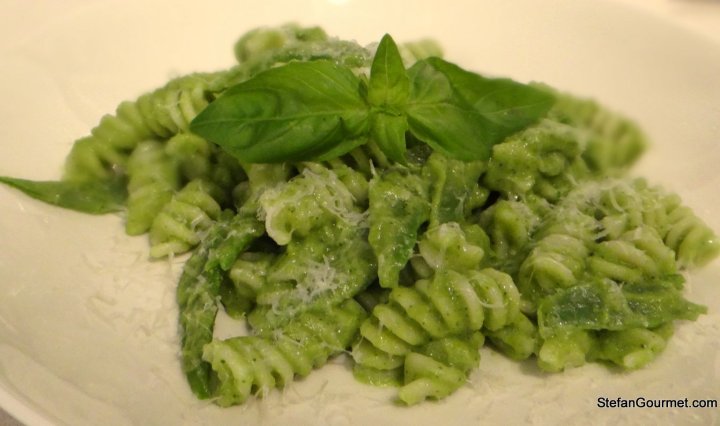
Snijbonen are a very common type of green beans in the Netherlands that are available year-round. I have not come across them abroad, but some googling has turned up that they are called “runner beans” in English and “fagiolino al corallo” in Italian. They have a nice fresh green flavor that is different from haricots verts and in the Netherlands they are usually served as a side to meat, cut up into narrow strips diagonally, with a bit of nutmeg. Served like that I don’t care much for them, but I’ve found that I like almost every vegetable if prepared in a nice way. Therefore I created this very simple but tasty pasta dish that is by no means authentically Italian. Continue reading “Fusilli with Runner Beans (Fusilli ai Fagiolini al Corallo)”
Burgundy (Bourgogne) is a region in France that is famous for its wine and its food. Three years ago we went there for a few days to discover the wine region and purchased some nice wines. Most Burgundian wines are at their best between 5 and 10 years from the harvest, and since the wines we purchased were mostly from 2007 and 2008 it is time to start drinking them. And so it’s a good occasion to organize some Burgundian evenings to share the wines with our friends and enjoy them with some good Burgundian food.
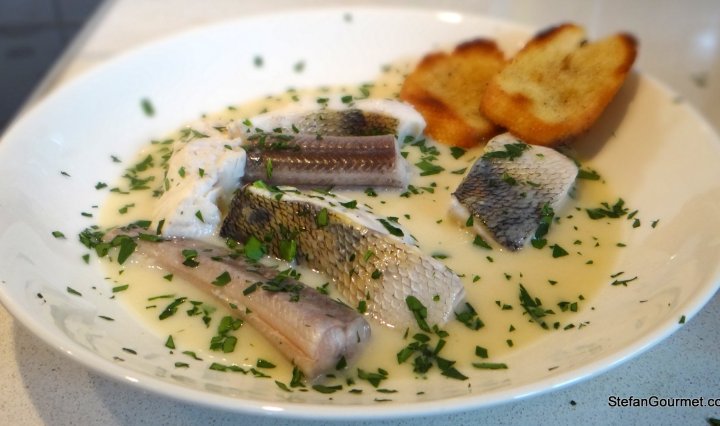
White burgundy is often paired with lobster, but since Burgundy is far from the sea there are no traditional Burgundian dishes with lobster. To cook a nice dish to be paired with Burgundian whites, I had to come up with something using freshwater fish. Pôchouse is a traditional freshwater fish stew that is prepared with eel, bass, pike, and tench. The fish is poached in aligoté (white wine from Burgundy) and served with a cream sauce. Continue reading “Burgundian Fish Stew (Pôchouse Bourguignonne)”
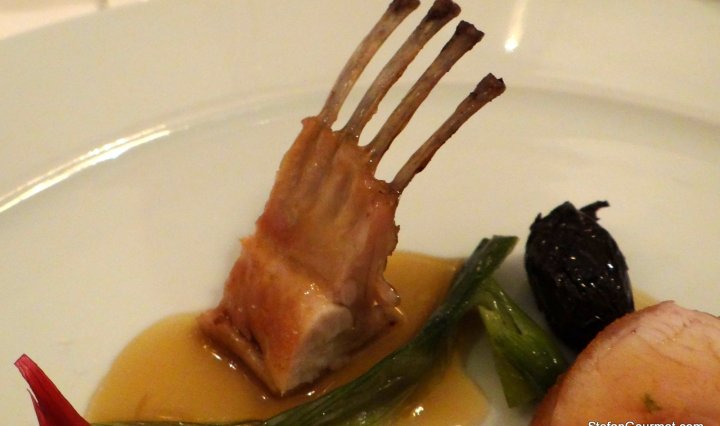
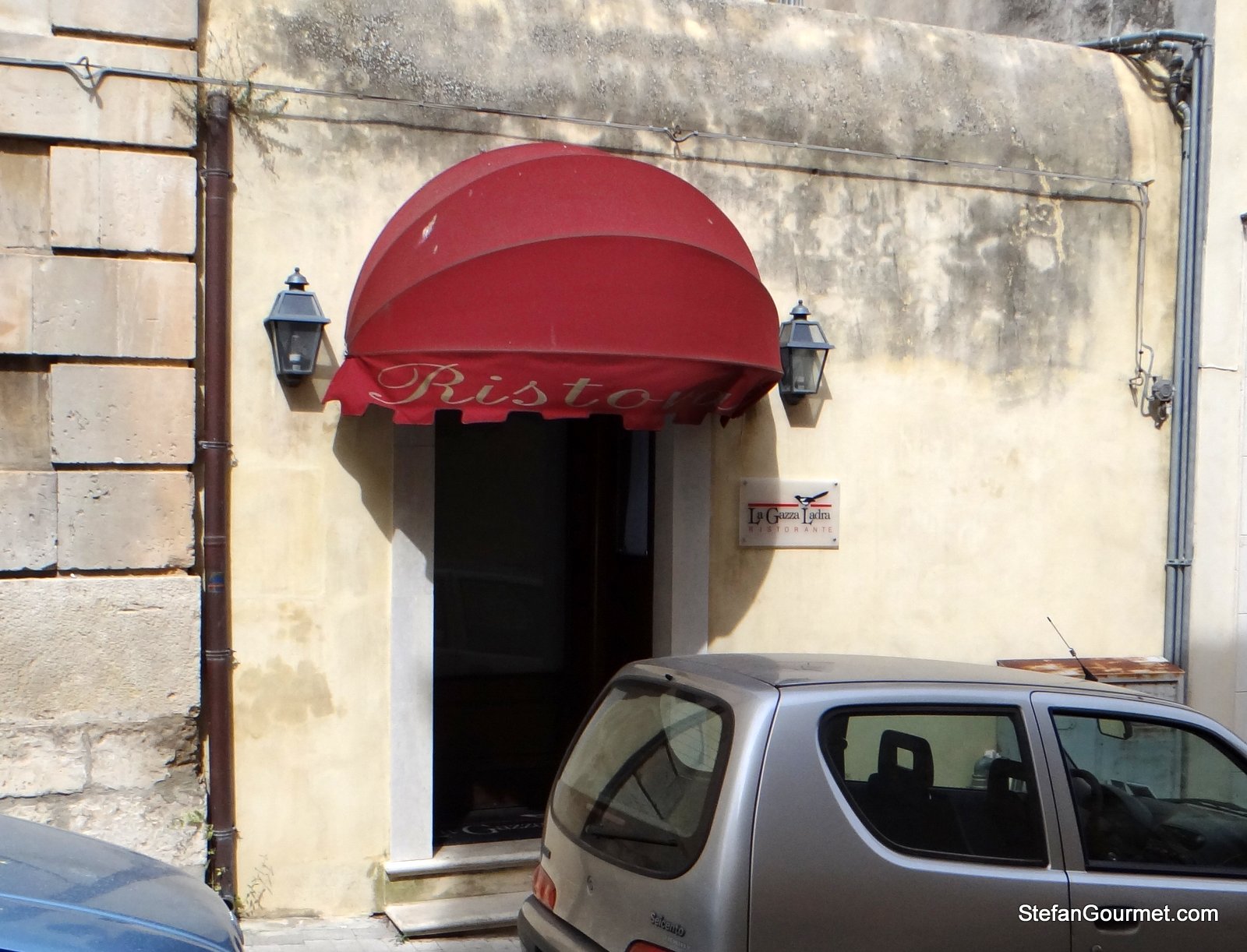
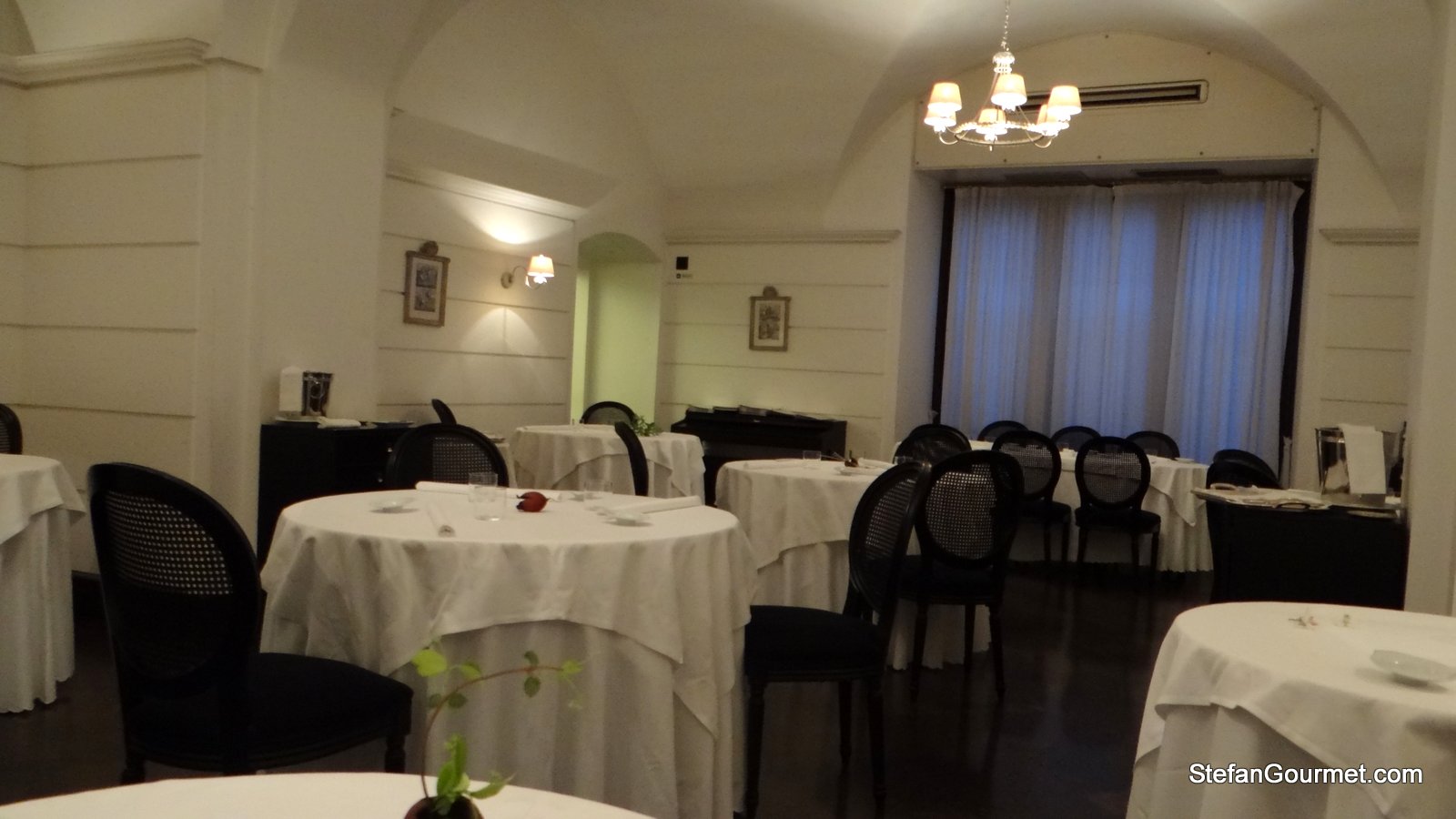
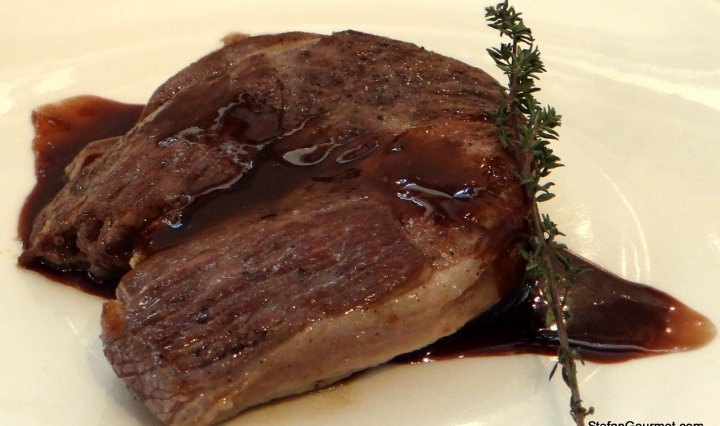
The final stop in our Sicilian food tour was La Gazza Ladra, a restaurant with one Michelin star located in the hotel Palazzo Failla in the Baroque town of Modica. The hotel and the restaurant are situated in a historic building.
On the Tuesday night when we visited there were only two other tables occupied in the classy dining room. The competition is stiff in this region of Silicy with La Madia and Il Duomo (in Ragusa) close by. The wonderful dinner we had at La Madia was a tough act to follow, and we only visited them in this order because that fitted with our itinerary. Besides à la carte there are two degustation menus, one for 80 euros and one for 95. As such, La Gazza Ladra is cheaper than La Madia and only half the price of Il Duomo. Continue reading “Dining in Sicily: La Gazza Ladra*”
Good food can be surprisingly easy to prepare, especially if you have sous-vide equipment at your disposal. You could also make this with a regular oven though, but you’ll have to pay more attention to getting the meat cooked just right. Lamb is one of my favorite meats, with rack of lamb one of my favorite cuts. Leg of lamb can be cooked whole, but you can also cook a slice of leg of lamb as a steak. Here I am serving it with a red wine demi-glace sauce. Assuming that you already have the lamb demi-glace, there isn’t a whole lot to it. Just cook the meat sous-vide, sear it, and deglaze the pan to make the sauce. Here’s what I did. Continue reading “Leg of Lamb Steak Sous-vide”
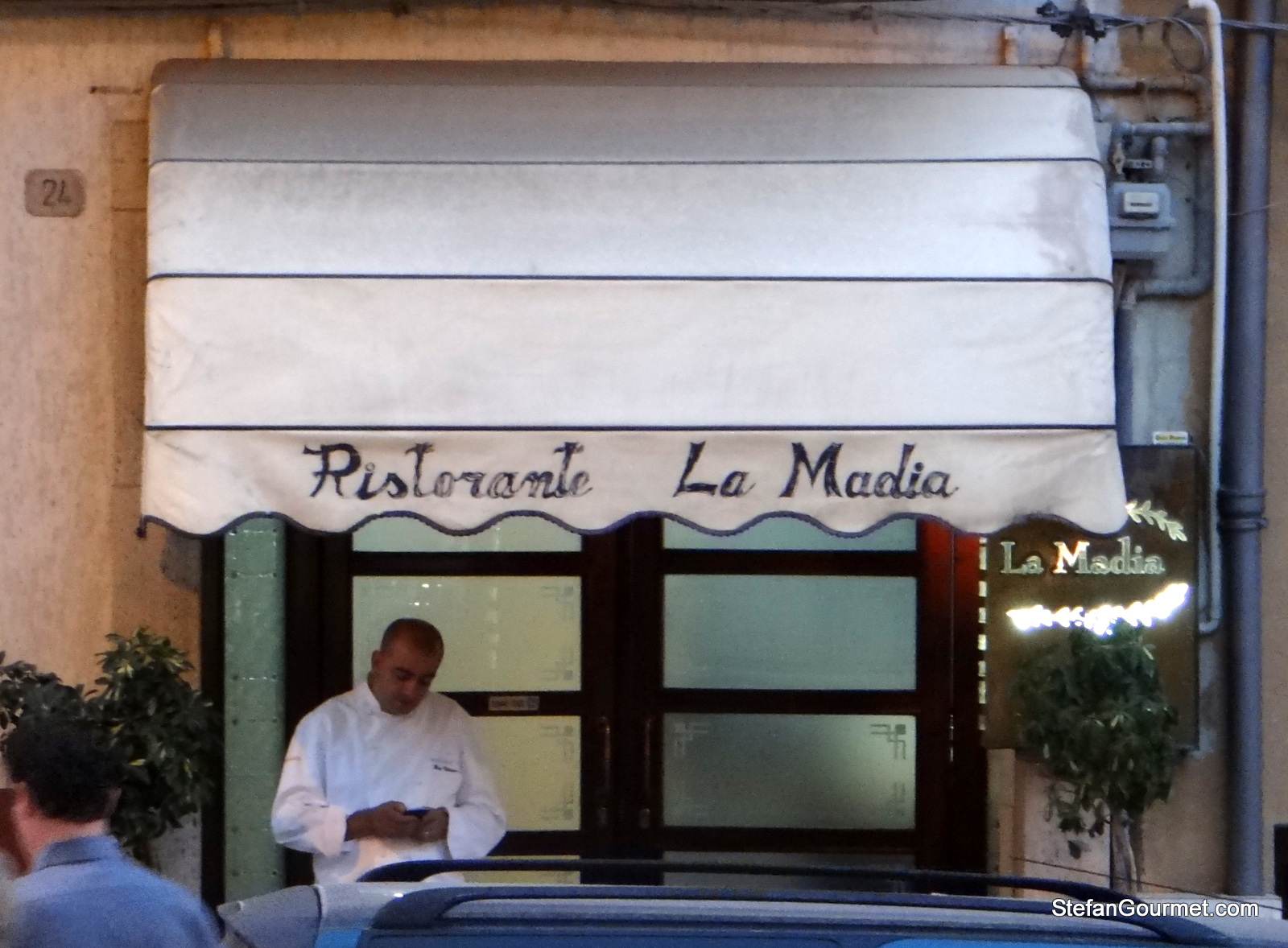
The chef checking his e-mail before the first guests arrived. From the outside the restaurant looks very small, but there is a spacious dining room behind the facade.
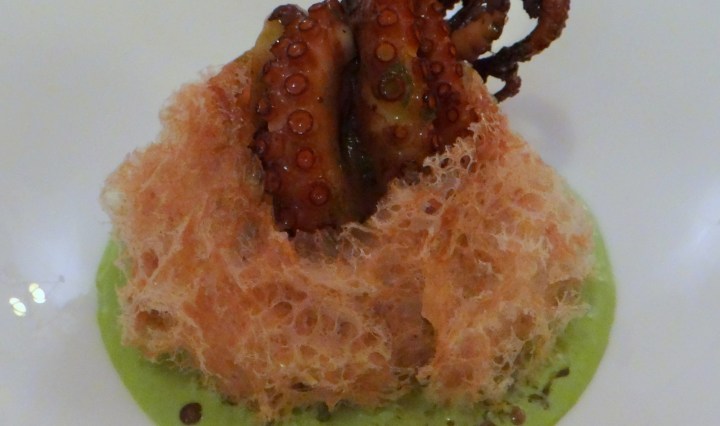
Licata is a port town in southern Sicily near Agrigento that doesn’t have much going for it except for the fact that Pino Cuttaia was born here and opened up a restaurant, La Madia. On a Monday night in April the restaurant was full, and I am pretty sure that most of those people came to Licata just to eat here (like we did).
I wrote before about Gambero Rosso and how to rate trattorie with 1, 2 or 3 prawns. Similarly, they rate restaurants with 1, 2 or 3 forks. There is only one restaurant with 3 forks (tre forchette) in Sicily, and this is it. The restaurant also has two Michelin stars. I tend to agree more with Gambero Rosso’s judgements in Italy than I do with Michelin’s, and that holds up in this case as well. Continue reading “Dining in Sicily: La Madia**”
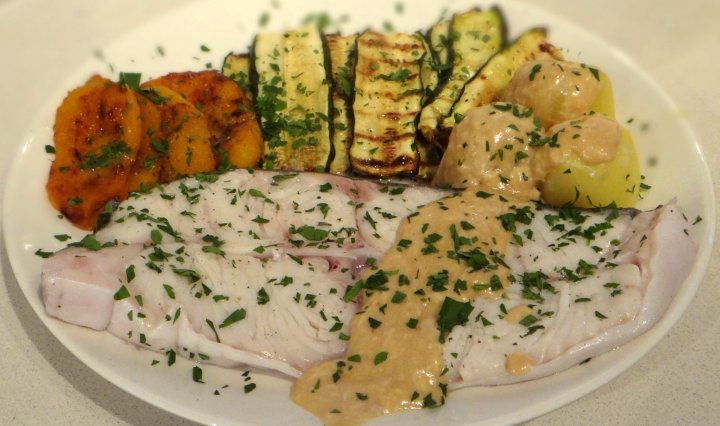
Halibut is not a fish that is easily available around here, and therefore I had not tried to prepare it sous-vide yet. So when I saw some at the market in Amsterdam I picked up a nice slice to try and cook sous-vide. Halibut is a flat fish like flounder, sole, and turbot, but it is a hell of a lot bigger so in most cases you don’t buy the whole fish but just a slice. I decided to serve it with a sauce made from white wine, fish stock, and cream. Served with potatoes and roasted vegetables it was a simple but nice meal, and it was no surprise that the halibut sous-vide was cooked to perfection: very succulent and tender.
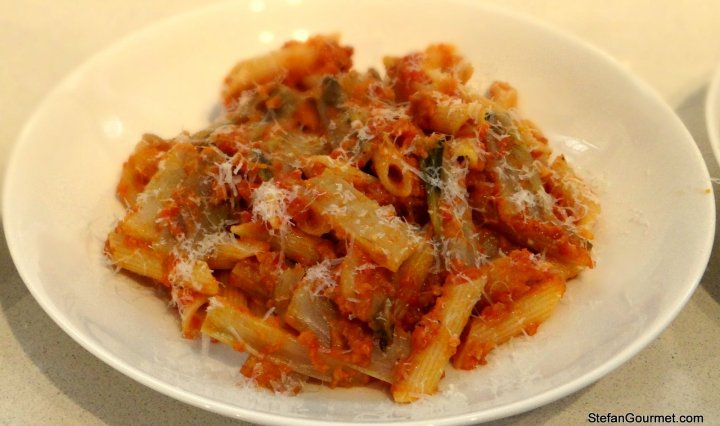
Chard is not generally available anymore in this country, but recently a new ‘organic’ store opened up near to my house that carries it. I remember my grandmother serving chard (called “snijbiet” in Dutch), but I had never prepared it myself. Now that I can get it, I made Chard Risotto and Pizzoccheri with chard. For both of them I only used the leaves, and so I had a nice bunch of chard stems in the crisper of my fridge, waiting for a purpose. I remember Emmy had posted a recipe for Baked Chard Stems with Tomato, Garlic, and Parmesan, and that was the inspiration for this pasta dish. We love pasta and eat it almost every day. I decided to try making something like ragù from the chard stems, and it worked out great. Continue reading “Pasta with Chard Stems (Penne alle Gambe di Coste)”
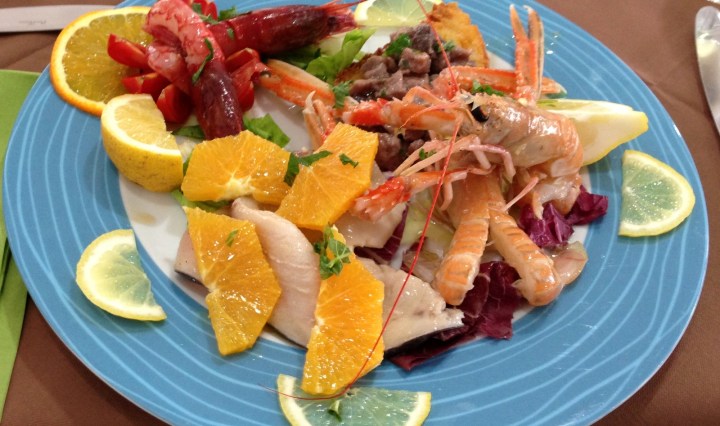
We ended up in the nice sea town of San Vito lo Capo, on the northern coast of Sicily near Trapani, by accident. We were supposed to go to the island of Pantelleria, but our flight got cancelled and we decided to go here instead. It was raining when we arrived, so we decided to have a full pranzo (lunch) like the Italians eat, rather than our usual snack for lunch such as a slice of pizza or Sicilian rice balls (arancini). Continue reading “Dining in Sicily: u Sfizziusu”
Bye Bye Blues is a well-known restaurant in Palermo with a Michelin star. We didn’t go there but to their trattoria called “Officina del Gusto” (Taste Workshop). We didn’t go to the restaurant so it’s hard to compare, but the prices are lower and I expect the restaurant to be more formal than the trattoria. Continue reading “Dining in Sicily: Officina del Gusto Bye Bye Blues”
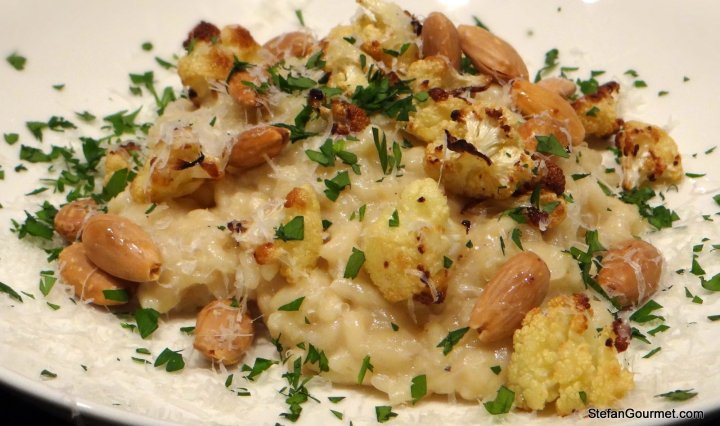
A few weeks ago I dined at my favorite Italian restaurant in Amsterdam: Bussia. The risotto I was served there was a cauliflower risotto and it was the inspiration for the risotto I created. This risotto is very creamy with most of the cauliflower used to make a cauliflower puree and the remainder roasted in the oven for some additional flavor and crunch. As a finishing touch I added some roasted almonds. I was happy with the result and will definitely make this again. If made with vegetable stock, this is an outstanding vegetarian dish. Continue reading “Cauliflower Risotto (Risotto al Cavolfiore)”
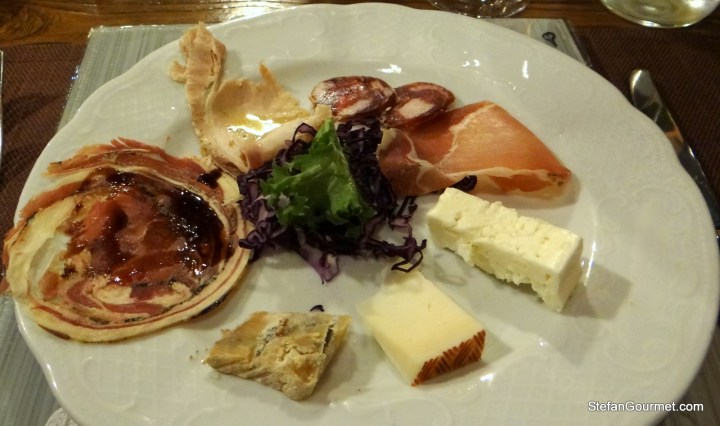
Our next dining stop in Sicily was in Castelbuono, a charming little town in the Madonie mountains in the North of Sicily. Even though it’s only half an hour from the sea, it is very much a mountain town and the restaurants here have meat on the menu rather than fish. The speciality of Nangalarruni are even mushrooms, which unfortunately our out of season at the moment. Continue reading “Dining in Sicily: Nangalarruni”