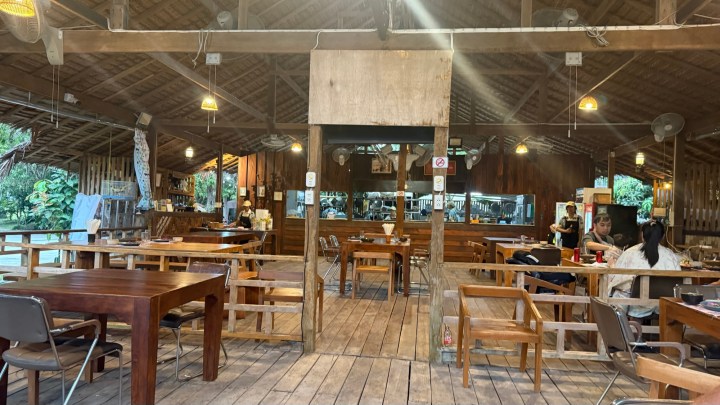
I discovered Ban Suan Lung Khai through the Michelin Guide, where it holds a Bib Gourmand designation—an award given to restaurants offering high-quality food at affordable prices. The name translates to “Uncle Khai’s Garden House,” which fits perfectly: the restaurant is a wooden veranda with an open kitchen, set in a coconut plantation in the quiet southern part of Koh Samui, Thailand. Uncle Khai and his team aim to select the freshest seafood daily, sourced directly from local fishermen, to share happiness through the taste of food. Guests should feel as warmly welcomed as if dining at home in Samui. The restaurant specializes in Southern Thai set menus and does not offer à la carte options.
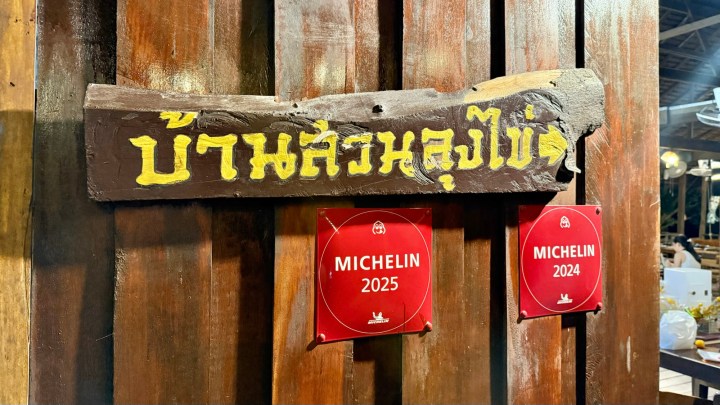
Reservations are strongly recommended at least one day in advance. I tried booking through Facebook Messenger but received no reply—apparently, they only use LINE, the Japanese alternative to WhatsApp and Messenger that dominates in Thailand. Since we were returning from an excursion to Pig Island, with the pier just minutes away, I decided to try my luck without a reservation. Although a few subtle eyebrows were raised (Thai are unfailingly polite), they did find us a table. Next time, I’ll definitely book ahead, either via LINE or through my hotel, as very little English is spoken at the restaurant.
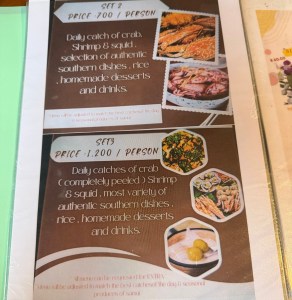
We were offered a choice between “Set 2” for THB 700 (€19) per person or “Set 3” for THB 1,200 (€33) per person (there’s also a Set 1 for THB 500 that wasn’t offered to us). According to the description, Set 2 includes a selection of authentic Southern dishes, while Set 3 offers the greatest variety. One key difference we discovered: the crab in Set 3 is fully peeled and ready to eat, whereas in Set 2 it’s served whole. The set also included water (and likely other drinks such as tea). The menu noted that “All menu can be requested for extra,” which I interpret as meaning you can ask for more—though we didn’t, as the portions were generous enough that we could barely finish them despite arriving with a healthy appetite.
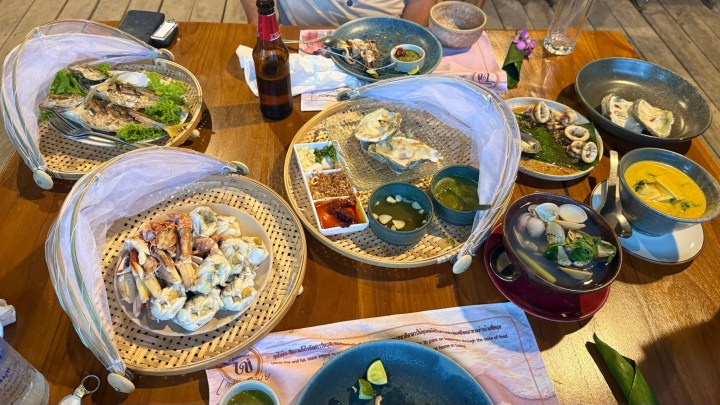
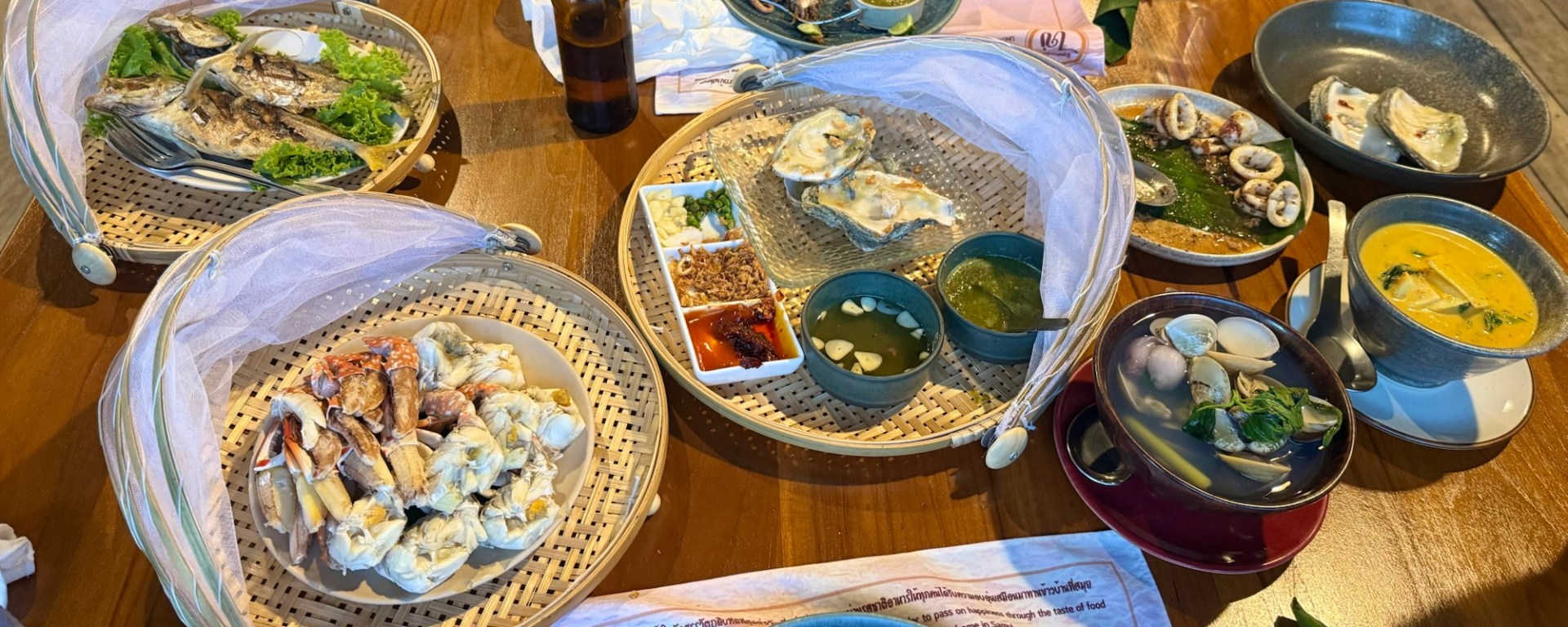
The menu doesn’t list the dishes, and they were served without explanation, so the account below is my best effort to describe what we had, based on educated guesses. All the dishes arrived within about 20 minutes, as this chef’s menu is meant to be enjoyed Thai style: everything served at once, together with rice. The photo above shows most of the abundant spread—we had already finished the oysters (you can still see the empty shells), but the rice and prawns had not yet arrived. For rice, you can choose between plain jasmine rice or rice cooked in coconut milk, tinted green from pandan leaves. Some dishes came covered to ward off flies, which was a sensible precaution given the open-air setting in a coconut plantation. (I would also recommend applying mosquito repellent before entering the restaurant.)
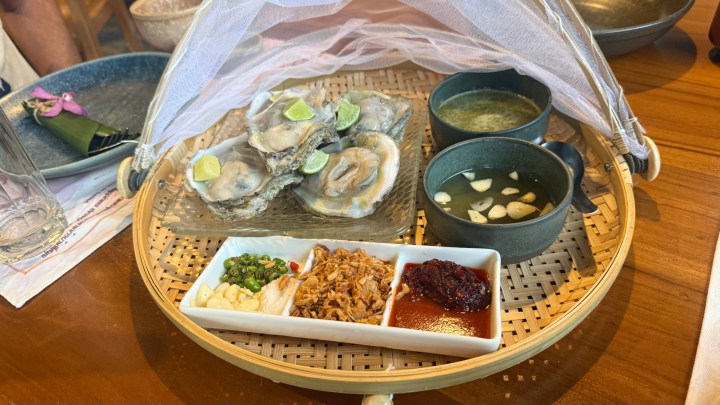
The Surat Thani oysters were served with a range of condiments that were also meant for the other dishes:
- a green curry sauce (fresh, without coconut milk)
- Nam Pla Prik Ma Nao: a mix of lime juice, fish sauce, palm sugar, and garlic—this paired best with most dishes
- a sweet, slightly spicy red chili sauce
- Nam Prik Pao, a sweet chili “jam”
- crispy fried shallots
- garlic
- sliced green rawit chilies
The local oysters themselves were large and meaty, with a sweet, creamy flavor profile—nothing like the briny delicate oysters I’m used to. They were served with lime quarters.
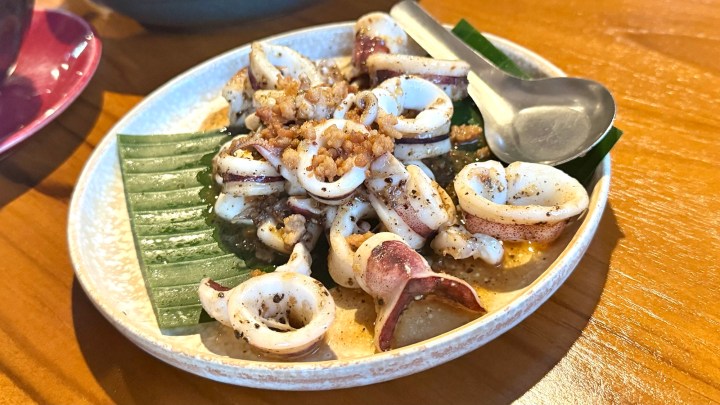
The Pla Muek Pad Kati Maprao was squid stir-fried in coconut oil and sprinkled with bits of coconut milk. Those golden, crunchy, nutty, and slightly sweet bits of coconut milk were what made this dish truly delicious and our favorite—even for Kees, who usually doesn’t enjoy squid. The coconut cream or milk is heated until the oil separates and the remaining solid residue turns into golden brown, crispy, toasted coconut flakes with a slightly nutty and sweet flavor. It was also by far the most tender squid we’ve had in Thailand. I couldn’t figure out what the crumbly topping was and eventually installed LINE on my phone to ask the restaurant. They replied within half an hour, even though they were closed today.
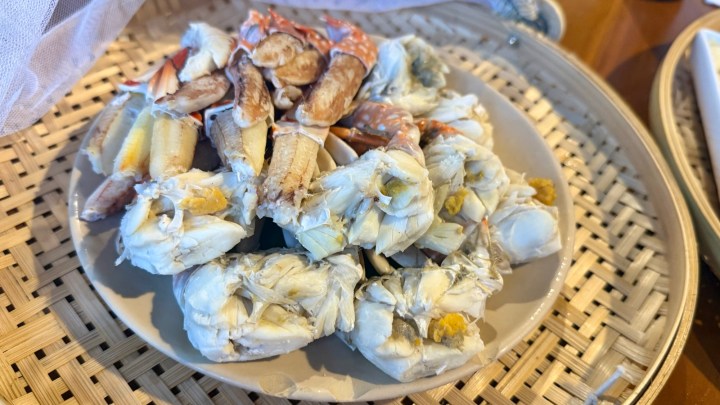
The fresh steamed horse crab came as legs and the section where the legs attach to the body. The fact that it had already been peeled, as mentioned above, made it very easy to eat. The crab was exceptionally tender, with an elegant, sweet flavor that paired beautifully with the Nam Pla Prik Ma Nao.
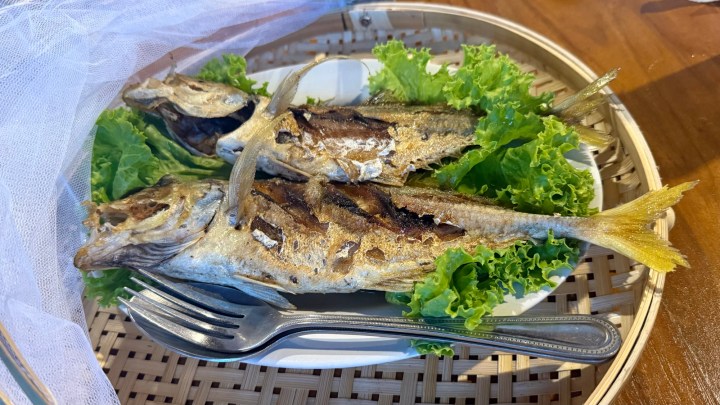
The short mackerel (Pla Too) came grilled. Although I would personally have preferred them slightly less cooked and therefore juicier, they were not dry like at some other restaurants. Once again, the Nam Pla Prik Ma Nao worked very well as a condiment.
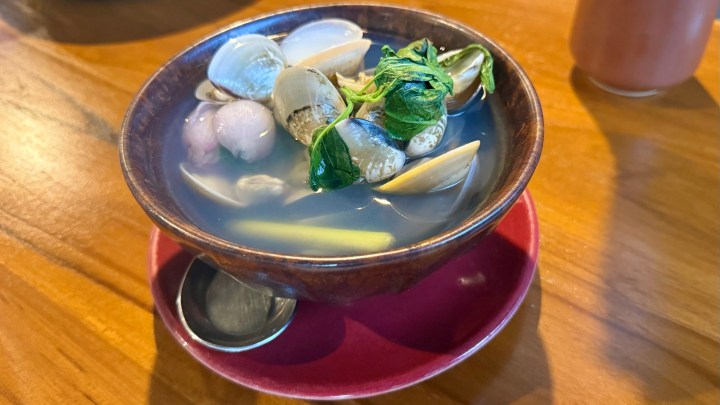
The clams came in a broth with Thai sweet basil and lemongrass, Hoi Lay Pad Horapha.
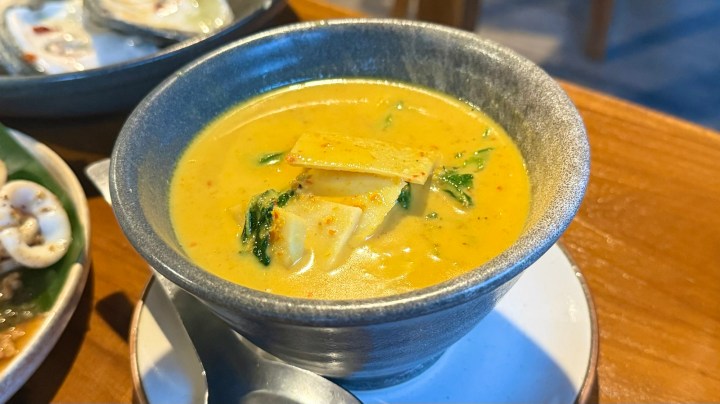
Given that the restaurant is located in a coconut plantation, it wasn’t surprising that the curry was Gaeng Kati (coconut curry) rather than the southern Gaeng Som (water-based sour curry). It featured shrimp, bamboo shoots, and Thai sweet basil. Despite southern Thai cuisine’s reputation for heat—and the fact that we asked for “medium spicy” (spicy for Westerners, but milder than Thai standards)—it wasn’t spicy at all. The chili paste likely included krachai (fingerroot) and certainly fresh turmeric as key ingredients.
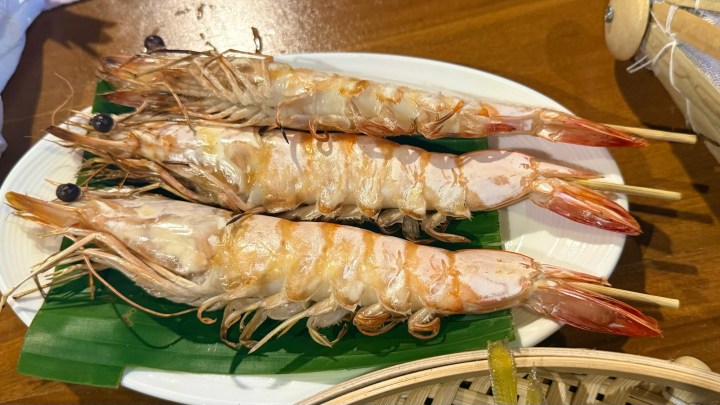
The final component of this seafood feast was large grilled prawns, skewered to keep them straight. There were actually four, but it’s always a challenge to photograph each dish before Kees ‘attacks’.
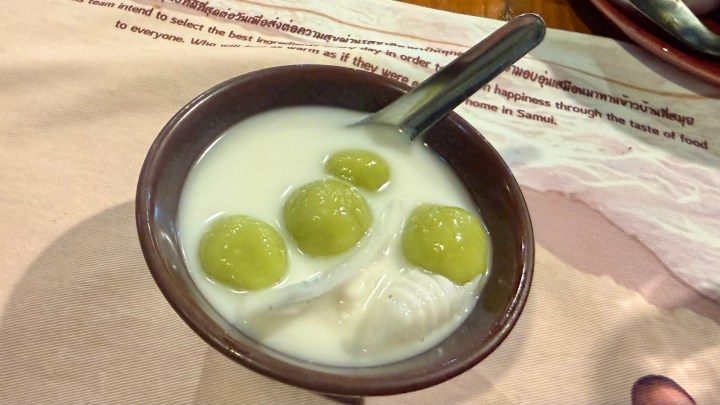
The dessert was Kanom Co: sweet balls of glutinous rice flour flavored and colored with pandan leaf extract, filled with a crunchy caramelized palm sugar center, and served in sweet coconut milk with fresh slices of coconut. I usually find Thai desserts rather underwhelming because they tend to be too soft and mellow, but this was quite nice—especially thanks to the crunchy spike of sweetness inside those balls.
This hasn’t been as easy for me to describe as a Western-style tasting menu with wine pairing, where I have much more knowledge and experience to draw on. I hope I’ve done it justice and conveyed that this was an exceptional meal in all its simplicity and in the quality of its ingredients and preparations—at a very reasonable price given the amount and quality offered. If you like seafood, make sure to visit this hidden gem on Koh Samui!


What a great post to arrive latish in the day. Oh, it truly may be difficult to describe the meal in a European-style but the wonderful photos (and perchance the fact one has been fortunate to dine like this oneself 🙂 !) tell a more than adequate story. Love the meal – the squid, clams and crab would probably have drawn me most ? And if wine was too ‘exotic’ to be served, I do hope I am seeing at least a bottle of beer on the table. And . . . I would have been interested in trying the dessert also . . . And . . ., I love sitting outside as long as a lot of little wings don’t flutter nearby . . .
LikeLiked by 1 person
Thanks for sharing. Must try next time we use Koh Samui airport.
LikeLiked by 1 person
The food sounds delicious and the setting looks lovely.
LikeLiked by 1 person
Sounds and looks amazing!
LikeLiked by 1 person